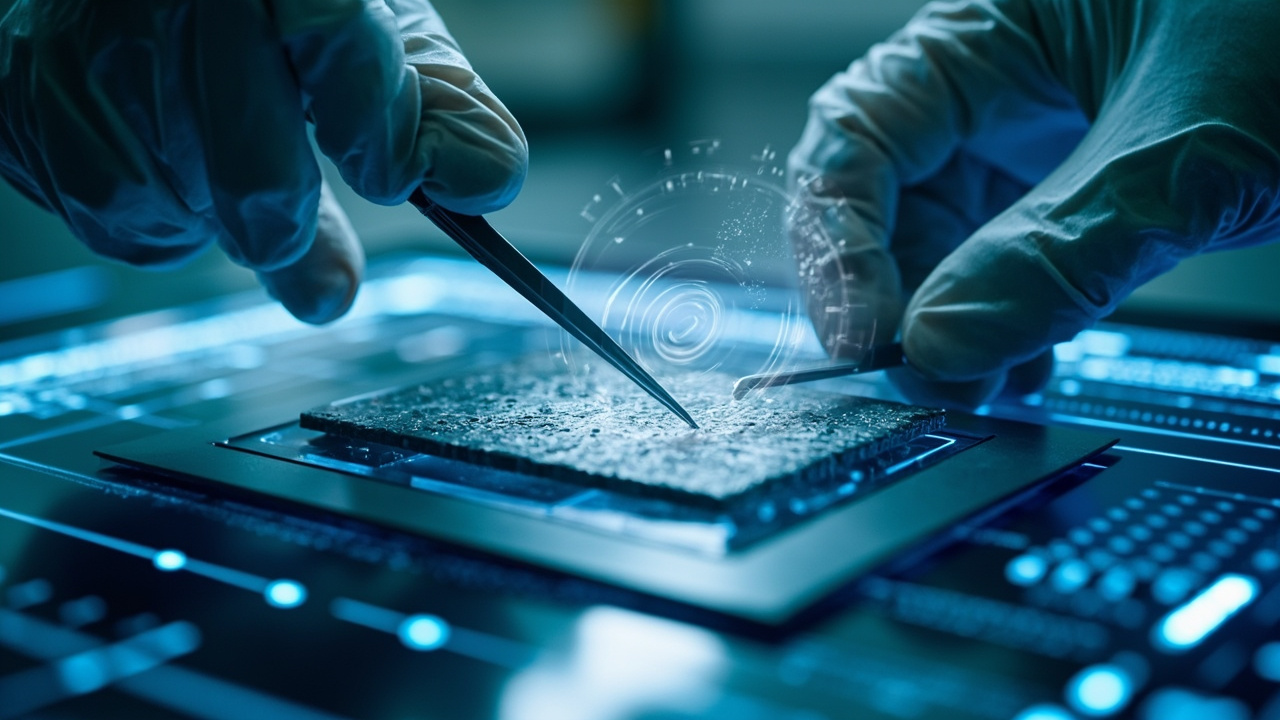
TL;DR: Rocket One Inc. executed a one-year sponsored research agreement with Virginia Commonwealth University, scheduled to begin November 1, 2026, to advance SKYMRAM skyrmion-based memory toward a soft-magnetic-layer switching proof of concept.
On Oct. 13, 2026, Rocket One Inc. (Nasdaq: RKTO) announced in Hoboken, N.J. that it had executed a sponsored research agreement with Virginia Commonwealth University, according to BusinessPressWire.
The agreement centers on SKYMRAM, described as a skyrmion-based magnetic memory technology with potential applications in next-generation AI chips and computing systems, according to BusinessPressWire.
The company said the work supports a broader strategy to pursue advanced semiconductor technologies for AI infrastructure, space, and defense applications, according to BusinessPressWire.
One-year program scheduled to start Nov. 1
The agreement establishes a one-year research program scheduled to begin November 1, 2026, according to BusinessPressWire.
The stated focus is nanoscale fabrication, materials optimization, and device-level testing, according to BusinessPressWire.
The central proof-of-concept milestone is demonstrating switching of SKYMRAM’s soft magnetic layer, according to BusinessPressWire.
Rocket One Chief Executive Officer Robb Knie said advances in underlying hardware include how information is stored and switched, according to BusinessPressWire.
Knie said the agreement establishes a concrete development path for SKYMRAM, with fabrication, characterization and switching milestones designed to test the technology at the device level, according to BusinessPressWire.
Knie also said the goal is to build the technical foundation for future chip architectures serving AI infrastructure, space, and defense, according to BusinessPressWire.
What SKYMRAM is designed to explore
SKYMRAM research uses skyrmions, characterized as nanoscale magnetic structures, as the basis for a proposed magnetic memory architecture, according to BusinessPressWire.
The program will investigate the material structures and switching behavior needed to advance this approach toward future semiconductor applications, according to BusinessPressWire.
The effort targets next-generation semiconductor memory using spintronics and nanoscale fabrication, according to the Associated Press release republished by AP News.
Chip Dispatch described SKYMRAM as a magnetic nonvolatile memory targeting AI accelerators and defense chips that must survive power loss and radiation.
Chip Dispatch reported that MRAM, or magnetoresistive random-access memory, stores bits as magnetic states rather than electric charge.
That magnetic storage approach makes the cells nonvolatile, meaning they hold data when power drops, according to Chip Dispatch.
Chip Dispatch also reported that magnetic memory, in principle, can tolerate the radiation environments that defense systems must survive.
Planned fabrication and materials work
The planned work includes patterning, etching, and characterizing magnetic material stacks designed to host skyrmions, according to BusinessPressWire.
A second planned element is developing and refining thin-film structures to support device testing, according to BusinessPressWire.
A third element is investigating control of the soft magnetic layer, identified as a central proof-of-concept objective, according to BusinessPressWire.
A fourth element is refining structures to host skyrmions approximately 100 nanometers in size and pursuing reliable switching within the planned experimental framework, according to BusinessPressWire.
The StockTitan summary of the announcement placed the target structure size at approximately 100 nanometers.
The work will involve feedback between materials development and device measurements, according to BusinessPressWire.
Who leads the research
Virginia Commonwealth University will lead the project under Principal Investigator Jayasimha Atulasimha, according to BusinessPressWire.
The agreement also provides for a Northwestern University subaward, according to BusinessPressWire.
The Northwestern work supports thin-film growth, materials characterization and optimization, according to BusinessPressWire.
Chip Dispatch reported that VCU brings research capacity in materials and device physics, areas where magnetic memory still has open questions.
Those open questions include cell stability, write energy, and integration with standard CMOS process flows, according to Chip Dispatch.
Quarterly path from stacks to switching
The program establishes quarterly objectives progressing from initial material-stack fabrication and characterization to switching studies and optimized nanoscale structures, according to BusinessPressWire.
The StockTitan summary described that sequence as moving from material fabrication and characterization to switching studies and optimized nanoscale structures.
These experiments are intended to generate evidence needed to assess SKYMRAM’s technical feasibility and guide subsequent development, according to BusinessPressWire.
The program represents foundational memory-device research supporting potential future AI chip architectures, according to BusinessPressWire.
The announcement explicitly stated that it does not establish completed AI processors or validated system-level performance, according to BusinessPressWire.
The StockTitan summary likewise stated that the program is foundational research, not completed AI processors or validated system-level performance.
Why AI and defense systems are named
Rocket One views advanced magnetic memory as a potential component of its long-term computing strategy, according to BusinessPressWire.
Applications in AI infrastructure, space and defense would require further development and application-specific validation, according to BusinessPressWire.
That additional validation includes any testing needed to establish radiation tolerance, according to BusinessPressWire.
Chip Dispatch reported that AI chips need fast, dense memory near their compute elements.
Chip Dispatch identified data-shuttling between logic and DRAM as a familiar bottleneck for AI hardware.
Chip Dispatch reported that defense chips need storage that endures power loss, interference, and harsh conditions.
Magnetic memory does not need constant refresh the way DRAM does, according to Chip Dispatch.
It also does not lose its contents when the supply is cut, the way SRAM and DRAM both do, according to Chip Dispatch.
For edge AI devices and mission hardware, Chip Dispatch described that combination as the entire sales pitch.
Where magnetic memory stands today
Chip Dispatch reported that embedded MRAM is real and shipping from foundries.
The publication reported that embedded MRAM in its embedded form has shipped from foundries for several years.
Standalone and high-performance variants remain development programs rather than products, according to Chip Dispatch.
The incumbents are entrenched, with SRAM owning on-chip caches, DRAM owning main memory, and NAND owning storage, according to Chip Dispatch.
Chip Dispatch described MRAM’s case as denser than SRAM, faster than NAND, and nonvolatile unlike both DRAM and SRAM.
Its critics answer that it has been the technology of the future for a long time, according to Chip Dispatch.
SKYMRAM is, in effect, another attempt to close that gap for power-constrained AI inference and radiation-hardened defense electronics, according to Chip Dispatch.
The open questions for MRAM are write speed, endurance, density, and cost at scale, according to Chip Dispatch.
Rocket One and VCU will have to answer all four before SKYMRAM appears in a shipping AI accelerator or a defense platform, according to Chip Dispatch.
Intellectual property and company portfolio
The agreement also provides Rocket One with an option to negotiate licenses to intellectual property arising from the project, subject to its terms, according to BusinessPressWire.
The StockTitan explanation stated that the signed agreement gives Rocket One an option to negotiate licenses to project-generated intellectual property, subject to the agreement’s terms.
That explanation added that the option does not itself secure a license.
Rocket One Inc. is a publicly traded technology company building a portfolio across artificial intelligence infrastructure, advanced semiconductor technologies, space and defense systems, and autonomous platforms, according to BusinessPressWire.
The company is advancing licensed spintronic and nanomagnetic computing technologies for AI acceleration and radiation-tolerant computing, according to BusinessPressWire.
Its portfolio also includes Swarm Stage AI, a drone-swarm threat-emulation and counter-UAS training platform, according to BusinessPressWire.
Tracer Drone Technologies, LLC, identified as a Rocket One company, provides end-to-end drone solutions including hardware, software, FAA training, and technical support, according to BusinessPressWire.
Those drone services help public safety, commercial, and enterprise organizations deploy and maintain aerial programs, according to BusinessPressWire.
Development stage and next evidence
Chip Dispatch reported that the partnership is at the development stage, with no announced products or commercialization timeline.
The publication also reported that there are no announced products, no disclosed capacity plans, and no published timeline for commercialization.
Until switching, stability, integration, and validation results are disclosed, the project signals intent rather than delivery, according to Chip Dispatch.
The next substantive evidence is expected from the scheduled experimental sequence beginning November 1, 2026, covering fabrication, characterization, switching, and approximately 100-nanometer optimized structures, according to BusinessPressWire.
The announcement contains forward-looking statements regarding strategic repositioning, development potential, suitability for orbital and defense uses, anticipated operations and market opportunities, according to BusinessPressWire.
The company cautioned that forward-looking statements are based on current expectations and assumptions and are subject to risks and uncertainties, according to BusinessPressWire.
Sources referenced
- BusinessPressWire - Rocket One Signs Agreement to Advance Nanomagnetic AI Chip Technology and Device Prototyping (https://businesspresswire.com/2026/10/13/rocket-one-signs-agreement-to-advance-nanomagnetic-ai-chip-technology-and-device-prototyping/)
- Chip Dispatch - Rocket One and VCU Partner to Build SKYMRAM Magnetic Memory for AI and Defense (https://chipdispatch.com/articles/rocket-one-and-vcu-build-skymram-for-ai-and-defense-silicon-50dbe206)