TL;DR: Anthropic confirmed on September 18, 2026 that it operates a wet biology laboratory in the San Francisco Bay Area to test AI ideas in physical experiments.
Lab confirmation in the Bay Area
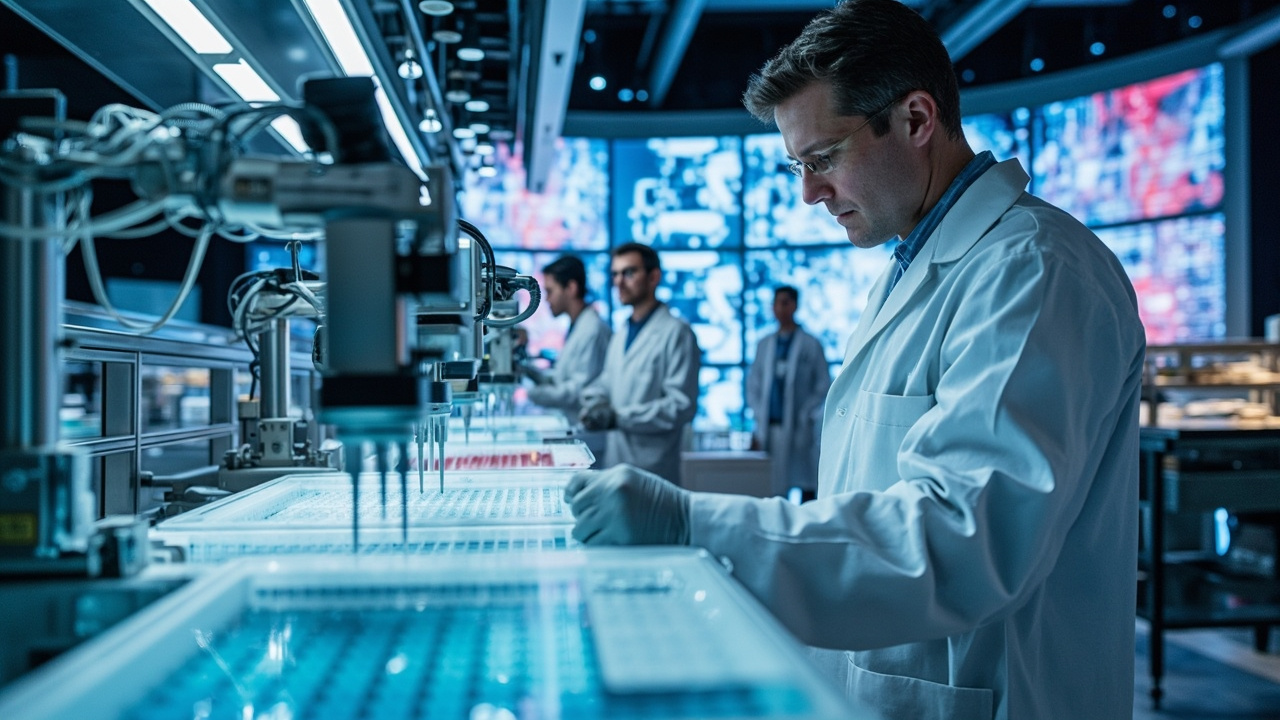
Anthropic built a wet lab for physical experiments in the San Francisco Bay Area, according to Reuters. Two people familiar with the matter described the facility to Reuters on condition of anonymity. The work has moved beyond "in silico" computer evaluations, those sources said.
Anthropic head of life sciences Eric Kauderer-Abrams confirmed the facility in a Reuters interview on Tuesday. The interview took place in the same week as the September 18 report, according to Reuters. The confirmation established that the AI company now conducts biology work inside its own facilities as well as through outside collaborators.
Engadget reported the same confirmation on September 18, 2026. TechCrunch separately reported on September 18, 2026 that Anthropic confirmed the Bay Area wet biology laboratory to its reporters. The three reports placed the disclosure in San Francisco coverage tied to Anthropic's life-sciences expansion.
What company leaders say the lab does
Kauderer-Abrams described the approach as typical of most biotech companies, according to Reuters. He said Anthropic performs some work in its own facilities and some work with external partners. The balance depends on speed and efficiency, he told Reuters.
"We believe that to do biology, the final test is still and will be for a while in real lab work," Kauderer-Abrams told Reuters.
A spokesperson later clarified that the laboratory is not for drug discovery specifically, according to Reuters. The spokesperson declined to elaborate on the distinction, according to Reuters. Engadget likewise reported that the spokesperson said the lab was not created specifically or only for drug discovery.
TechCrunch reported that Anthropic described the main focus as fundamental biology rather than drug discovery. TechCrunch also reported that Anthropic declined to give specifics about projects inside the wet lab. Engadget reported that Kauderer-Abrams did not specify the exact research underway.
From software models to physical testing
Anthropic has said it wants to unlock treatments for rare diseases, according to Reuters. Its biology effort follows earlier computer-based evaluations and software development for science, according to Reuters. The wet lab adds physical experimentation to that computer-based foundation.
The company launched software called Claude Science, according to Reuters. Kauderer-Abrams announced Anthropic's intention to run drug programs at a San Francisco event in June, according to Reuters. At that event, he said Anthropic would conduct preclinical work in areas that traditional companies did not find attractive financially.
Engadget reported that Claude Science was a drug-discovery program launched in June. Engadget reported that Anthropic said it was interested in research that pharmaceutical companies would avoid because the work likely would not pay off financially. TechCrunch reported that Anthropic published research reports supporting drug discovery, including work on accelerating protein design and work on bimolecular modeling.
Anthropic added Novartis CEO Vas Narasimhan to its board, according to Reuters. Anthropic bought the startup Coefficient Bio for about $400 million in stock, according to media reports cited by Reuters. Anthropic confirmed the acquisition and said it would help build tools for drug development, but it had no comment on the deal price, according to Reuters.
TechCrunch reported that Anthropic bought Coefficient Bio, described as a stealth AI biotech, in April. TechCrunch reported that Anthropic recently announced a joint drug-discovery arrangement with Novo Nordisk. Engadget did not list a purchase price for Coefficient Bio in its September 18 summary.
Plan for Claude, robotics and automation
Anthropic wants to advance how its Claude AI can direct robotic units to carry out science experiments with limited human intervention, one person familiar with the matter told Reuters. Like other biotechnology companies, Anthropic is embracing physical automation, two people familiar with the matter told Reuters. The sources spoke on condition of anonymity, according to Reuters.
Anthropic believes human oversight and involvement remain essential for safety, its spokesperson told Reuters. The company characterized automation of laboratory execution as an early effort, according to Reuters.
"We're in the very early innings of using AI to automate the execution of lab work," Kauderer-Abrams told Reuters.
Engadget reported that Kauderer-Abrams clarified that human oversight remains essential for safety for now. TechCrunch reported that the lab gives Anthropic a method to test theories generated by language models in real life. The automation goal centers on meaningful acceleration across laboratory processes, Kauderer-Abrams told Reuters.
Hiring and procurement expansion
Anthropic is bulking up in-house laboratory efforts for speed and firsthand experience in biology, Kauderer-Abrams told Reuters. The company still outsources work when efficient, he told Reuters. He said some activities move much faster inside Anthropic's own hands, with the goal to operate at the largest possible scale, according to Reuters.
Anthropic looked to hire a leader who could ramp up procurement and other operations, according to a recent LinkedIn job post cited by Reuters. Another role solicited through Jobera sought an expert on protein and nucleic acid characterization and other biochemical work, according to Reuters. A third Anthropic job listing stated that the goal was to speed up progress in the life sciences by an order of magnitude, according to Reuters.
Life sciences already represents one of Anthropic's biggest investment areas by headcount and resources, Kauderer-Abrams told Reuters. The hiring posts signaled continued expansion of purchasing, operations and laboratory characterization capabilities, according to Reuters. The procurement push followed the June drug-program announcement and the Coefficient Bio acquisition, according to Reuters.
Focus on difficult biological targets
Kauderer-Abrams said AI could fast-track development for conditions previously considered undruggable because they were too difficult to treat, according to Reuters. He pointed to bispecific and trispecific antibodies as examples of technologies that could benefit, according to Reuters. Those complex molecules can be directed at multiple points on a targeted protein or cell or hit multiple targets, according to Reuters.
Engadget reported that Kauderer-Abrams believes AI could fast-track treatments for conditions previously thought too difficult to treat. Engadget reported that the potential benefit includes faster development of complex and targeted therapies. The precise diseases Anthropic is addressing and its progress remain unclear, according to Reuters.
Once a molecule is identified, bringing a drug to market can take years of testing in human trials, according to Reuters. Isomorphic Labs, the drug-discovery arm of rival Alphabet, worked for years to reach the clinic, according to Reuters. That timeline illustrates the extended path from laboratory identification to potential market availability.
Boundary around clinical trials
Anthropic has not taken on the challenge of testing drugs in human trials, according to Reuters. Kauderer-Abrams said Anthropic has yet to run any clinical trial, according to Engadget. The company plans to stop short of clinical trials to avoid competing with drugmakers, according to Reuters.
TechCrunch reported that Anthropic does not want to appear to compete with the pharmaceutical industry. TechCrunch linked that concern to Anthropic's customers and partners in pharmaceuticals. TechCrunch cited the newly announced work with Novo Nordisk as an example of a pharmaceutical relationship.
TechCrunch also reported that Anthropic launched a Life Sciences Verification Program during the same week to give vetted biology researchers access to its most powerful models. The program adds controlled access for qualified researchers alongside the internal laboratory effort, according to TechCrunch. Anthropic has faced questions after launching products perceived to compete with customer offerings, according to TechCrunch.
Safety debate surrounding the announcement
The laboratory disclosure arrived while public fears about AI were prominent, according to Reuters. In the two weeks before the September 18 report, some Anthropic researchers warned that AI could lead to human extinction, according to Reuters. During the same period, Anthropic said it found examples in which its systems could have been used toward biological-weapons development, a finding that met some skepticism, according to Reuters.
Anthropic recently flagged and stopped multiple scientists who were using its AI models to create potential biological weapons, according to Engadget. CEO Dario Amodei called for a development slowdown and said a future AI more capable than the OpenAI agents that hacked Hugging Face could cause catastrophic damage, according to Reuters. Engadget separately reported that Amodei proposed steps to reduce the risk of losing control over frontier AI systems.
Anthropic is preparing to go public in a potentially $2 trillion initial public offering to raise money for AI development, according to Reuters. Amodei has repeatedly identified bioterrorism as one of AI's largest risks, according to TechCrunch. TechCrunch reported that former Anthropic researcher Jacob Coxon warned that people building AI believed it could threaten human survival by the end of the decade.
Kauderer-Abrams said Anthropic balances improvement of models for medicine with careful deployment to limit risk, according to Reuters. He said the mission involves developing powerful AI in a way that benefits the world, with the largest opportunity in the life sciences, according to Reuters. For Amodei, the medical effort carries personal significance because a disease killed his father only a few years before a cure came about, as described in a recent essay cited by Reuters.
Sources referenced
- EXCLUSIVE: Anthropic quietly sets up biology lab as it ramps AI drug program | Reuters (https://www.reuters.com/world/anthropic-quietly-sets-up-biology-lab-it-ramps-ai-drug-program-2026-09-18/)
- Anthropic is operating a lab that conducts biology experiments | TechCrunch (https://techcrunch.com/2026/09/18/anthropic-is-operating-a-lab-that-conducts-biology-experiments/)