TL;DR: Plaud puts its recorder in earbuds
TL;DR: Plaud announced the $249.99 Plaud One Explorer Edition on Aug. 27, 2026, a pair of AI earbuds and a 4G-connected charging case that can record, transcribe and summarize conversations without a phone.
Plaud is moving its recording system from phone attachments into a wearable audio product. The company introduced the Plaud One Explorer Edition as a new AI wearable designed to record, transcribe and summarize conversations, this time shaped like earbuds rather than a pin, according to The Verge.
The launch centers on two ways to capture audio. The earbuds can be worn for calls and in-person meetings, while the standalone charging case can also record on its own. The case includes built-in 4G connectivity to upload and process conversations without relying on a phone or Wi-Fi to stay connected, according to The Verge.
Preorders opened Aug. 27, 2026, in selected markets. Shipping is expected to start in the fourth quarter of 2026, according to The Verge and TechCrunch. Engadget similarly reported that shipments are expected sometime before the end of the year. The Explorer Edition framing positions this first release for early adopters before broader availability, according to Engadget.
A familiar earbud shape for note-taking
Why earbuds, and who Plaud says it serves
Plaud already had more than 2.5 million people using its hardware or software before this launch, according to TechCrunch. The company has been known for the Plaud Note and Note Pro, devices that can magnetically attach to a phone to record in-person conversations for later automatic transcription and summarization, according to Engadget.
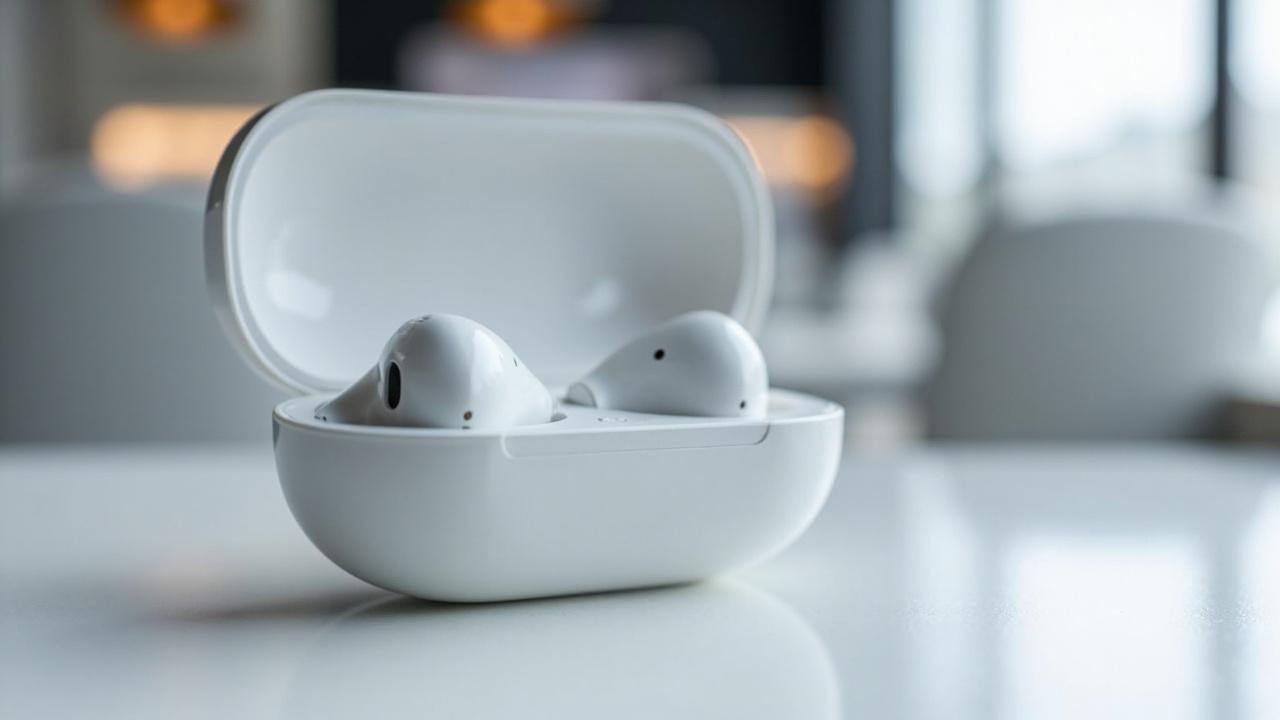
With Plaud One, the company is placing that meeting-recording approach into a popular wearable format. The earphones adopt the simple bare-bones style of Apple’s AirPods, and can record calls, while their case can be used to record in-person conversations or take notes, according to TechCrunch.
Plaud Chief Executive Nathan Xu said the company is not necessarily competing directly against established audio brands, but positioning its meeting-recording technology in a familiar form, according to TechCrunch. In a briefing, Xu said an AI wearable should be always ready, socially acceptable and private by design:
“[For AI] we need to have a wearable and an always-ready interface, one that people love to wear, is socially acceptable, and private by design,” according to TechCrunch.
That positioning matters because Plaud is not alone in this form factor. Its rivals Viaim and Anker already have similar note-taking earbuds in the market, according to TechCrunch. Other hardware and software competitors named in launch coverage include Pocket, Comu, Granola, Fathom and Read AI, underscoring how crowded AI note-taking has become.
Limited first run
TechCrunch described the launch as more of a trial run. The Plaud One will be limited in quantity, as the startup likely wants to gauge demand for AI-focused earphones before it commits to the format, according to TechCrunch.
The company had claimed in June that it reached $100 million in annual run-rate revenue, according to TechCrunch. The same report noted that YC-backed Pocket had also reached that milestone, while companies including Anker, Comu, Viaim and Genspark are building in the space.
Earbuds: microphones, storage and recording time
What each earbud captures
Each earbud features 16MB of local storage, for a total of 32MB across the pair, and three microphones that can record at a distance of up to two meters, according to The Verge. Plaud said the earbuds can record for up to six hours, which is also the maximum estimated battery life, according to The Verge.
TechCrunch provided a more detailed breakdown of recording time. The earphones can record six hours of in-person meetings and three hours of calls on a single charge, according to TechCrunch. Engadget reported a similar distinction for everyday use: a claimed six hours with active noise cancellation off for music playback, and closer to four hours of uptime when used mostly for calling.
The earbuds also include noise-cancellation features and force-activated sensor controls on the stem, according to The Verge. Engadget reported that the earbuds offer active noise cancellation with up to 40 decibels of ambient noise reduction, plus EQ presets and IP54 dust and splash resistance.
Capturing online meetings
Beyond in-room audio, the earbuds can natively capture audio from video-calling apps including Google Meet and Zoom, according to Engadget. That capability addresses online meetings and calls, alongside in-person conversations.
For playback and calls, the earbuds use Bluetooth 5.4 with multipoint support, meaning they can connect with up to two devices, according to Engadget. Codec support includes SBC and LDAC, according to Engadget. In theory that allows Hi-Res audio playback over LDAC, but iPhone users will default to SBC, and Qualcomm AptX codecs are not included, according to Engadget.
Plaud One has 12mm drivers and features active noise cancellation, according to TechCrunch. The drivers and cancellation system indicate that Plaud intends the device to function for listening as well as recording, although music and podcast listening requires pairing with a phone or other device, according to Engadget.
Case works as a standalone recorder
Four microphones and longer range
The charging case is more than a charger. It includes four microphones with a five-meter recording range, a built-in speaker, 512MB of storage, and a combined battery figure of up to 36 hours, rechargeable via USB-C, according to The Verge. TechCrunch similarly reported that the case can capture voices clearly within five meters.
That longer range lets users leave the earbuds out and still capture a meeting, conversation or personal voice memo through the case alone, according to Engadget. The case has its own set of microphones for that purpose, according to Engadget.
Storage in the case substantially exceeds storage in the buds. Each earbud has 16MB of local storage, with the charging case offering an additional 512MB of onboard storage, according to Engadget. With just the case, Plaud said users should have enough space to record up to 30 hours of audio, according to Engadget.
Battery and charging
Combined with the case, users can record up to 25 hours of conversations on a single charge, according to TechCrunch. The Verge reported a combined battery life figure of up to 36 hours for the system.
Engadget detailed the case battery as an 830mAh cell offering up to 36 hours of additional battery life. With 10 minutes of USB-C charging, users can get two hours of additional usage, while a full charge takes approximately one hour, according to Engadget.
The case can therefore support extended recording days without the earbuds being worn continuously. Users do not need to constantly wear the Plaud One devices to use the AI features because the standalone charging case provides an alternative capture path.
Cellular connection without a phone
eSIM and carrier coverage
The distinguishing hardware decision is cellular connectivity in the case. The case supports an eSIM card, a feature the company said allows users to instruct Plaud’s AI agents remotely without using a phone or computer, according to TechCrunch.
Plaud integrated LTE connectivity into the charging case and negotiated terms with carriers in more than 80 countries and regions to allow the earbuds to connect without a cellular contract, according to Engadget. Bloomberg’s launch-day coverage similarly described built-in eSIM connectivity working with networks in more than 80 countries.
The idea is that recordings can automatically upload directly to Plaud’s servers so the software can transcribe and summarize before the user returns to a desk, according to Engadget. The Verge likewise reported that built-in 4G lets the system upload and process conversations without relying on a phone or Wi-Fi connection.
Find My and Fast Pair
For everyday phone use, the earbuds support Apple’s Find My network and Google’s Fast Pair protocol, according to Engadget. Those additions align the product with mainstream wireless earbuds when paired for listening, even though Plaud’s primary emphasis is recording and AI processing.
Plaud Intelligence and Plaud Agent
From transcript to action
Transcription and summarization run on Plaud Intelligence, which the company described as designed to “understand and execute on human intent,” according to The Verge. Once a conversation is transcribed, the AI agent can connect to tools including Gmail, Google Calendar, Notion and Slack, according to TechCrunch.
Plaud said the agent can perform tasks such as writing follow-up emails and creating documents or presentations based on conversation contents, according to TechCrunch. Engadget reported that the assistant is intended to generate reports, prepare follow-ups and take action across Gmail, Google Calendar, Notion and Slack.
Users can invoke the agent by saying “Hey, Plaud” or by pressing the dedicated button on the side of the case, according to Engadget. The Verge described an AI button on the charging case used to activate “Plaud Agent,” with native integrations intended to prevent users from switching between platforms.
Planned agentic update
Plaud is also working on expanded agentic capabilities, expected to arrive as part of an update in the coming months, according to TechCrunch. The company said it will introduce a credit-based system for different tasks, and buyers of Plaud One will receive $200 in credits for those tasks, according to TechCrunch.
Engadget reported that each Explorer Edition will come with $200 worth of complimentary Plaud tokens for agentic features, while Plaud is still deciding how many tokens will be offered through different account tiers. Plaud Intelligence’s improved capabilities are planned to roll out to all Plaud products through the Plaud App 4.0 update in the fourth quarter of 2026.
Price, transcription limits and availability
$249.99 preorder
The Plaud One costs $249.99 and was available to preorder in selected markets starting Aug. 27, 2026, according to The Verge. TechCrunch listed the preorder price as $249, while Engadget described a $250 Explorer Edition for early adopters.
Buyers receive 300 minutes of free transcription per month, after which additional plans start from $8.33 per month when paid annually, according to TechCrunch. Engadget reported that the free Starter plan offers 300 minutes of monthly transcription minutes, while the $20 Pro plan provides 1,200 minutes every 30 days.
Making full use of transcription will almost certainly require a subscription tier, and agentic features will use Plaud tokens, according to Engadget. That means the total cost of ownership could exceed the upfront hardware price for heavy users, depending on the transcription and AI-credit tiers selected.
Sources referenced
- Plaud is launching AI earbuds | The Verge (https://www.theverge.com/ai-artificial-intelligence/985500/plaud-one-earbuds-ai-recorder-price-availability)
- Plaud's new earphones come with an eSIM-enabled case for talking to AI agents | TechCrunch (https://techcrunch.com/2026/08/27/plauds-new-earphones-come-with-an-esim-enabled-case-for-talking-to-ai-agents/)