TL;DR: Meta used its Connect 2026 keynote on September 23, 2026, in Menlo Park, California, to introduce Muse AI upgrades, the Muse Charm pocket device, camera-free Ray-Ban Meta Audio glasses, Ray-Ban Meta Gen 3, and $1,299 Meta VR Glasses planned for spring 2027.
Meta wrapped its annual Connect showcase on Wednesday with an agenda centered on personal AI agents and wearable hardware, according to Meta's "Everything We Announced at Meta Connect 2026" and The Verge's "Meta Connect 2026: The 7 biggest announcements." The Associated Press, in "Meta Connect 2026: New AI and VR glasses and Muse agent get the spotlight," described the event as a bet on wearable AI and a new AI agent as Chief Executive Mark Zuckerberg discussed the company's direction.
The company framed the strategy as personal AI agents that work for everyone and devices that reach them anywhere. Muse, introduced just a few weeks before Connect, received much of the keynote attention, with new voice, vision, shopping, and computer-use capabilities, alongside expansion to glasses, phones, desktop, web, and WhatsApp.
What Muse gained at Connect
Meta said Muse keeps getting better with new features, connectors, and a state-of-the-art model, according to its "Everything We Announced at Meta Connect 2026." Access points described by the company included the Muse app, WhatsApp, the web, and a Mac desktop version that can manage messages, find old files, and help users get work done.
A central addition was voice interaction. Meta described a voice mode intended for long, in-depth conversation while Muse continues work in the background. Users can also describe a preferred voice, including faster or slower pacing or a specific accent, according to the Meta announcement summary.
Meta Superintelligence Labs introduced Muse Realtime Avatar, described as embodiment technology that turns Muse Realtime Voice into expressive, interactive avatars. Meta presented it as a way to see Muse come to life rather than interact only through text or voice.
Muse on AI glasses is planned for the coming months. Meta said hands-free access will be activated by saying the agent's name. The glasses-based version is designed to act on what the wearer is looking at, so a request does not require a detailed verbal description. Examples listed by Meta included asking about a product on a shelf, a flier on a wall, or a long list of school supplies, with Muse able to take action.
Muse will also receive its own email address. Meta said the address can be used by Muse to get things done and as another channel for communicating with the agent.
For Mac users, computer use is now available with Muse for Mac. With permission, Meta said, Muse can drive any app on a Mac and continue working through lined-up tasks while the user steps away.
Shopping, travel, and work connectors expand
Connectors were presented as a major reason Muse can perform tasks across services. Meta said it launched with dozens of partners and access to the entire Shopify catalogue, according to "Everything We Announced at Meta Connect 2026."
For shopping, Meta named Walmart, Best Buy, American Eagle Outfitters, DICK'S Sporting Goods, Fanatics, Gap, Michael Kors, Sephora, Ulta, and Wayfair, plus Shop Pay and PayPal for payments. Expedia was described as coming soon for travel planning, while Instacart was listed for stocking the kitchen. For work, Meta listed Notion, Granola, GitHub, and Box. The company said more partners are on the way.
The Verge's live coverage of "Meta Connect 2026: The biggest news and announcements" also noted developer-facing plans around Horizon. The company announced Horizon Create, a mobile app, and Horizon Studio, a browser app with more granular controls, for creating games with AI prompts. Published games made with those tools could be recommended on Facebook and Instagram and be playable there, according to that coverage.
Muse Charm introduces pocket hardware
Meta briefly showed Muse Charm at the end of the Connect presentation. Zuckerberg displayed the product during the keynote, and The Verge described its appearance as almost like a chunky smartwatch without the strap, with a large screen and a small lanyard.
Meta described Muse Charm as a pocket-sized device built for talking and interacting with Muse, using a state-of-the-art real-time voice model. The company said it will share more later this year. The Verge's event hub characterized the device as Tamagotchi-like and said it is set to ship before the end of the year.
Bloomberg reporting summarized by The Verge on September 24 added that the Charm would recognize and interact with other nearby Charms. That secondary report also associated the device with a two-inch OLED touchscreen, a new operating system, a fingerprint sensor for starting interaction with Muse AI, and a built-in 5G modem intended to avoid dependence on Wi-Fi, according to The Verge summary of the Bloomberg report.
Meta VR Glasses move VR into glasses form
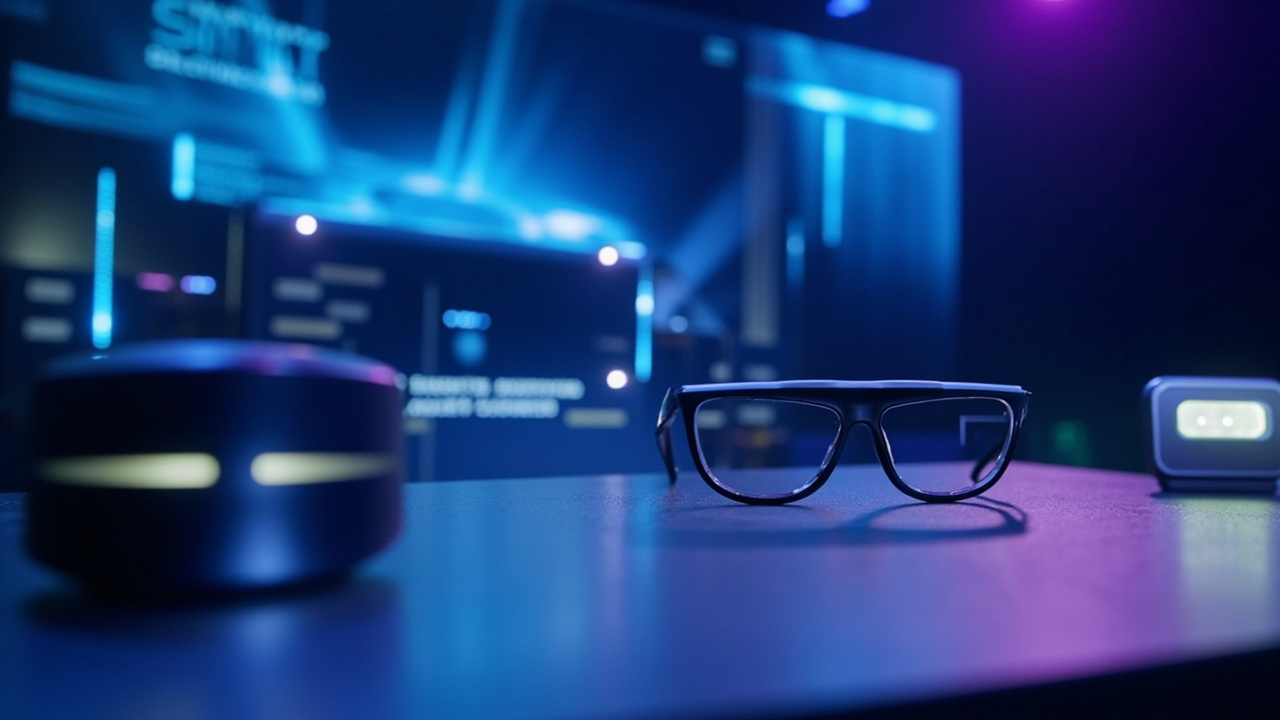
The major hardware reveal was Meta VR Glasses, presented as a breakthrough device as wearable as glasses that delivers cinema-style viewing and full spatial computing. The Verge's "Meta Connect 2026: The 7 biggest announcements" reported that the glasses use a smart-glasses-style frame without straps and are tethered to a pocket-sized puck containing compute hardware, battery, and storage.
Meta said the glasses weigh 100 grams and are five times lighter than Meta Quest 3. The puck includes a Qualcomm Snapdragon Reality Elite chip, 128GB of storage, and 12GB of RAM. The display system, called Infinite Display, uses 5K micro OLED panels with 2,412 by 2,288 pixels per eye and a refresh rate of up to 120Hz.
The device is planned to launch in spring 2027 for $1,299. The Verge placed that price above the Meta Ray-Ban Display but below Apple Vision Pro. Users will be able to connect the glasses to a Mac or Windows laptop as a virtual external display, with an option for a virtual surface keyboard and touchpad.
Meta said the glasses will have access to the full Meta Quest catalog of apps and games and support for Xbox Cloud Gaming. The company also described the product as the first IMAX Enhanced certified VR device, with support for immersive live sports and 3D movies. A hologram feature is intended to create a photorealistic digital version of the wearer's face for calls while wearing the glasses, a concept The Verge compared to personas on Apple Vision Pro.
Camera-free audio glasses lead expanded eyewear line
Meta introduced its first audio glasses alongside a broader expansion of AI eyewear across Ray-Ban, Oakley, and Meta Glasses. The company said that by the end of the year there will be more than 100 styles of AI glasses, according to "Everything We Announced at Meta Connect 2026."
The Ray-Ban Meta Audio glasses have no cameras. The Verge identified the missing camera as the highlight, noting that users can listen to music, take calls, or talk with an AI assistant but cannot take pictures or record video. The distinction matters because camera-equipped glasses have raised privacy and harassment concerns.
Meta called the audio-only model its lightest and slimmest AI glasses yet. The Verge reported a weight of 43 grams, up to 12 hours of battery life per charge, and up to 48 hours with the charging case. The Ray-Ban Meta Audio will launch October 13 starting at $349 with 23 color and lens combinations. Meta also named two new styles, Clubmaster and Burbank, and said the frames support a wide range of optical prescriptions.
Ray-Ban Meta Gen 3 adds battery, button, and microphones
The next generation of the mainstream camera-equipped Ray-Ban Meta glasses will start at $449. The Verge reported up to nine hours of battery life, one hour more than Gen 2, alongside a slimmer and more comfortable design.
Meta added a customizable action button for instant access to Meta AI and other features. The Gen 3 model also includes a six-microphone array that Meta said cuts more than 90% of background noise. There will be 27 color and lens combinations, including new Zena and Aviator frame styles. Meta described Zena as a bold, modern cat-eye design and Aviator as one of the most recognizable frame silhouettes.
The built-in LED indicator that signals recording remains. The Verge noted that Meta rolled out a privacy fix for the indicator last month.
Lower-cost Adventurer, new styles, and wider availability
Meta also updated its in-house eyewear line. A lower-cost Meta Adventurer will start at $249 for a basic design with black frames and gray lenses, launching October 23, according to The Verge.
Other style additions include Meta Capri and Meta Nova frame shapes, a new Ivory colorway of Meta Glasses by Kylie Jenner, a collaboration collection with LISA, and a limited-edition Meta Fury available only in Meta Lab locations at launch. Meta also introduced a Mix & Match program in the United States for customizing frame, lens, and case colors.
Regional availability is expanding. Meta said Meta Glasses are starting in Singapore, South Korea, and Mexico, with Brazil and the United Arab Emirates coming soon. The Verge reported that the Meta Ray-Ban Display went on sale in the United Kingdom and Canada on September 23 and will be available in France, Italy, and Germany starting October 13, with online ordering in those regions and the United States.
For Display glasses, Meta is introducing an Explore app for browsing experiences built for glasses, plus photo editing, an improved calendar, and mirrored phone notifications.
Sources referenced
- Everything We Announced at Meta Connect 2026 | Meta (https://www.meta.com/blog/meta-connect-2026-everything-we-announced/)
- Meta Connect 2026: The 7 biggest announcements | The Verge (https://www.theverge.com/tech/999593/meta-connect-2026-everything-announced)