TL;DR: Karl Deisseroth, Peter Hegemann and Georg Nagel won the 2026 Nobel Prize in Physiology or Medicine for discoveries that created optogenetics, a light-based way to turn individual brain cells on and off.
The Nobel Assembly at Karolinska Institutet announced the joint award on 5 October 2026, according to NobelPrize.org. The citation recognized the three researchers “for their discoveries concerning light-gated ion channels and optogenetics.” The Assembly named Deisseroth of the Howard Hughes Medical Institute and Stanford University in the United States, Hegemann of Humboldt University of Berlin in Germany, and Nagel of the University of Würzburg in Germany.
The winners, aged 54, 71 and 73 respectively, will share 12 million Swedish kronor equally, according to Nature. That sum was described as about US$1.2 million. The Associated Press, carried by NPR, reported the same kronor total and dollar approximation. The announcement was made in Stockholm and opened the year's Nobel week.
Stockholm opens Nobel week with brain announcement
Thomas Perlmann, secretary of the medicine committee, said he reached all three winners by telephone on Monday, according to the Associated Press reporting published by NPR. The presentation took place at the Nobel Forum at Karolinska Institutet in Stockholm.
The medicine award began a sequence of announcements laid out by that same report. Physics was scheduled for Tuesday, chemistry for Wednesday and literature for Thursday. Peace was set for Friday, followed by the Nobel Memorial Prize in Economic Sciences on Oct. 12. Last year's medicine award had gone to three scientists studying the immune system.
The Nobel committee also highlighted the global spread of the method on X, writing that it “is now being used in laboratories around the world to reveal the brain's mysteries,” according to the Associated Press account. Nature reported that the technique had been on many scientists' shortlists for years before the 2026 recognition.
What optogenetics does
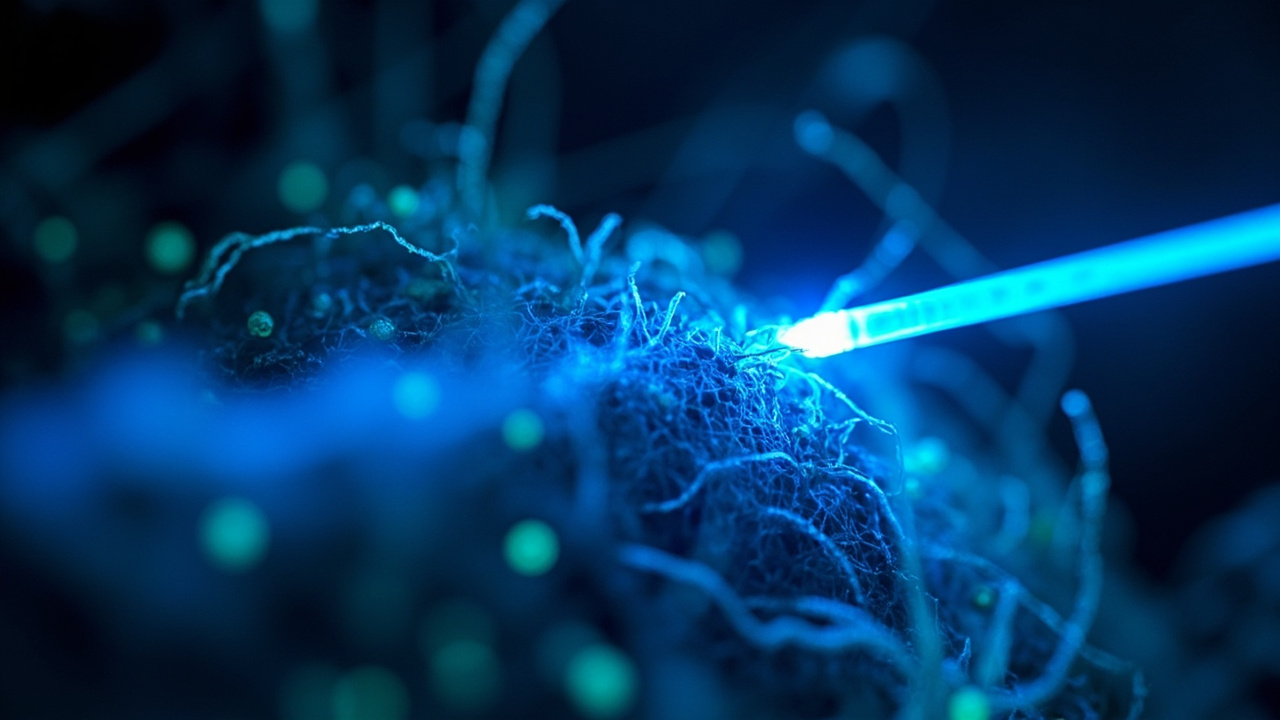
Optogenetics allows investigators to control neurons with pulses of light and observe how nerve cells influence memories, feelings and behavior in a living brain, according to NobelPrize.org and Nature. The approach makes it possible to activate or silence individual nerve cells while an animal is behaving.
That capability addresses a long-standing limit in brain research. In the 20th century, scientists explored which regions were linked to particular functions, but available tools did not establish cause and effect, according to NobelPrize.org. The resulting picture was compared to a sketch map marked by gaps.
Per Svenningsson, chair of the Nobel Committee for Physiology or Medicine, said the new tools offer a different level of mapping, according to NobelPrize.org. “Optogenetics provides opportunities for mapping the brain in a way that we could once only dream of,” Svenningsson said.
Alga that swims toward light supplied the sensor
The story began with Hegemann's interest in Chlamydomonas, a single-celled alga that moves toward a light source, according to NobelPrize.org. In the early 2000s, working with Nagel, he identified channelrhodopsin, a protein located on the cell surface with unusual behavior.
When exposed to blue light, the protein opens a passage that lets charged ions enter the cell, generating an electrical impulse, according to NobelPrize.org. The two collaborators found that many kinds of cells became responsive to light after receiving the protein.
Nature identified the organism as Chlamydomonas reinhardtii and the molecules as channelrhodopsin 1, 2. In response to blue illumination, the protein admits charged molecules and produces a small electrical charge, that report explained. The work established a portable light sensor that functioned outside its original algal setting.
From frog eggs to rat neurons
Before the brain application, the channel proteins were tested in other cell systems. Nobel illustrations and supporting references pointed to expression studies in frog eggs, work that helped characterize the light response.
Deisseroth then carried the algal gene into rat nerve cells. Upon blue illumination, the modified cells produced a nerve signal, according to NobelPrize.org. He published that advance in 2005. Two years later, he showed that the light-controlled switch operated in the brains of living mice.
Nature described the later step as insertion of the channelrhodopsin gene into rodent neurons, causing the cells to fire and signal to connected neurons. The combination of genetics with light delivery for selective control of defined circuit elements became known as optogenetics. Nature said the approach changed neuroscience by permitting tests of cause and effect rather than correlation alone.
Millisecond control during behavior
Deisseroth described the precision in remarks to a Stanford University press conference held on the announcement day, according to Nature. “We use light to turn on or off individual cells, or even types of cell or connections from one part of the brain to another,” he said.
He added that switching could occur with millisecond precision in real time during behavior and cognition, making it possible to identify what matters for function and to chart normal and disrupted activity, that same account reported. He called the method “a real confluence of engineering and medicine.”
The ability to target defined cell types and projections distinguishes the technique from broader stimulation approaches. Researchers can test how particular circuit elements contribute to memory, emotion and action while the brain remains intact. That precision underlies its adoption for circuit mapping across laboratories.
How labs use the tool today
Researchers have used optogenetics to uncover circuits tied to particular memories, feelings and behaviors connected to neurological and psychiatric conditions, according to NobelPrize.org. The method spread quickly and gained global impact after the mouse-brain demonstration.
Clinical researchers are exploring the principle in efforts to restore vision for people with visual impairment, that same announcement said. The work remains investigational and was described as attempts, not as an established treatment.
Nature reported that findings from optogenetic experiments have informed understanding of healthy brain operation and disorders including depression, schizophrenia, Parkinson's and Alzheimer's. Neuroscientist Rui Costa, president and chief executive of the Allen Institute in Seattle, Washington, said the work fundamentally altered neuroscience practice and affected wider biology while opening therapeutic possibilities, according to Nature. Neuroscientist Alexander Gottschalk of Goethe University Frankfurt in Germany said the method offered a simple and precise way to designate which cells respond, and noted that many in the field had anticipated the prize for several cycles.
Laureates reacted with surprise
Deisseroth, who describes himself as a night owl, said he had worked late before the call arrived, according to Nature. “It was a complete surprise,” he told the Stanford press conference. He recalled lying down and beginning to drift toward sleep when his bedside phone rang, leaving him briefly unable to form words.
He called the experience exciting, overwhelming and delightful, that report said. The account captured about 30 seconds of speechlessness before the significance registered.
The three laureates bring distinct training and institutional histories. Deisseroth, born in 1971, earned a Ph.D. in 1998 and an M.D. in 2000 from Stanford University and holds the D.H. Chen Professorship with appointments in bioengineering and psychiatry and behavioral sciences, according to NobelPrize.org. Hegemann, born in 1954, earned a Ph.D. in 1984 at the Max Planck Institute for Biochemistry in Martinsried and is Hertie Senior Professor of Neuroscience in Berlin; the awarded discoveries were made at Martinsried. Nagel, born in 1953, earned a Ph.D. in 1988 at the University of Frankfurt and is professor of molecular plant physiology at Würzburg; the awarded discoveries were made at the Max Planck Institute for Biophysics in Frankfurt.
Why the committee chose this work
The Assembly framed the laureates as founders of a new neuroscience era. Hegemann and Nagel supplied the light-gated channel, while Deisseroth converted it into a usable neuronal switch, according to NobelPrize.org. Together, those steps allowed direct testing of how defined cells drive function.
The committee stressed that fresh findings arrive daily, contributing to a central puzzle of human biology: how the brain operates. The 2026 award therefore recognized both a molecular finding and the engineering that made it broadly usable in living tissue.
Sources referenced
- Press release: Nobel Prize in Physiology or Medicine 2026 - NobelPrize.org (https://www.nobelprize.org/prizes/medicine/2026/press-release/)
- Medicine Nobel awarded for brain ‘switch’ that controls neurons with light | Nature (https://www.nature.com/articles/d41586-026-03091-2)