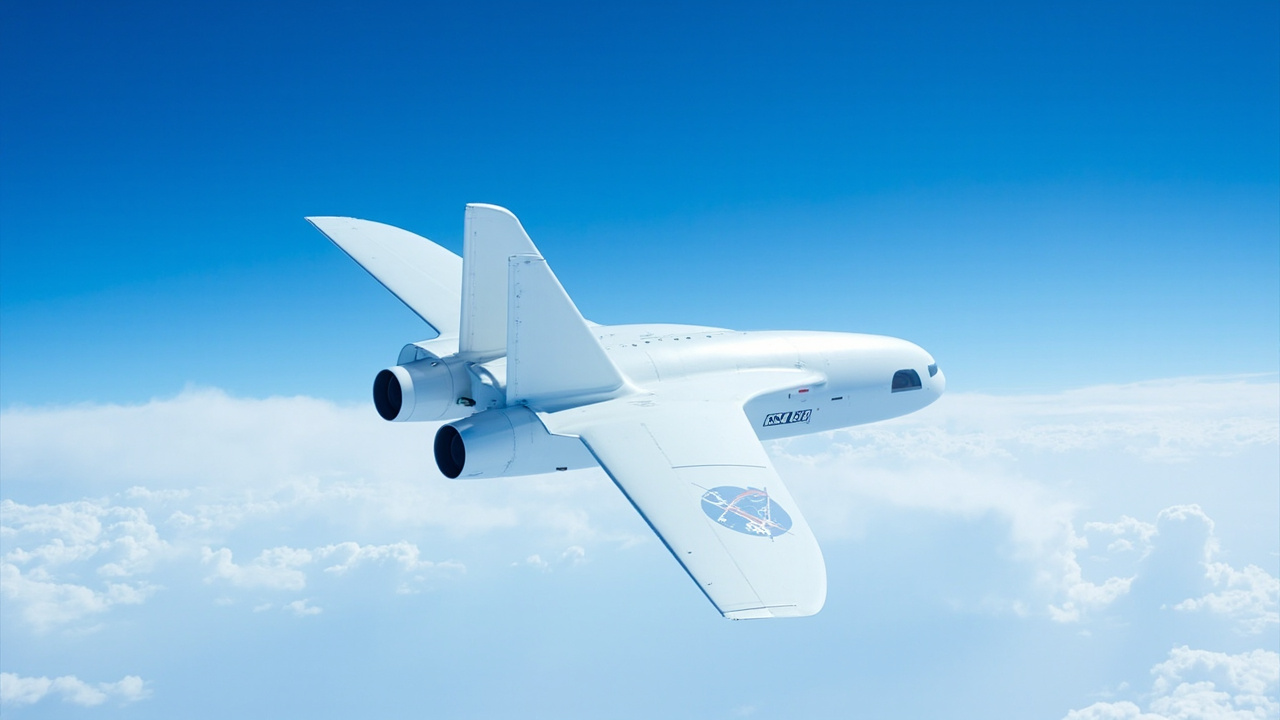
NASA's X-70 Fractal Is the Agency's New Experimental Aviation Testbed
NASA has a new experimental aircraft: the X-70 Fractal, announced November 4, 2026, is a crewed, high-performance platform built to explore advanced flight-control systems and next-generation aviation technologies. The unveiling took place at the UP.Summit held at NASA's Kennedy Space Center in Florida, according to NASA's official announcement.
The X-70 is not a production aircraft — it is a research vehicle intended to carry experimental payloads in real flight conditions, giving engineers data that ground-based simulations cannot replicate. NASA Administrator Jared Isaacman described its purpose directly: "The X-70 Fractal gives NASA a crewed, high-performance platform to test advanced flight control, maneuverability, and other cutting-edge technologies in real flight."
Performance Specifications and Design
The X-70 Fractal is built around modularity and performance. According to NASA's announcement, the aircraft has a maximum takeoff weight of 10,000 pounds and is designed to cruise at Mach 0.75. Its operational ceiling reaches 45,000 feet, and its range exceeds approximately 1,726 miles — equivalent to 1,500 nautical miles.
One of the aircraft's defining features is its payload flexibility. The X-70 can accommodate experimental payloads of up to 2,000 pounds in both internal and external configurations. That modular design allows researchers to swap out test hardware rapidly, cutting the downtime between experiments. Isaacman highlighted this aspect of the design as central to NASA's research goals, noting the aircraft's ability to move quickly from one experiment to the next.
The aircraft also carries distinctive canted vertical tail fins, a visual signature of its experimental lineage. Its name, "Fractal," reflects its intended role as a platform capable of fragmenting a broad research agenda into discrete, repeatable test campaigns.
Reviving NASA's X-Plane Legacy
The X-70 arrives as NASA works to reassert itself in experimental aviation, a field the agency helped define with aircraft such as the Bell X-1 — which broke the sound barrier in 1947 — and the hypersonic X-15. Those programs produced technologies that shaped commercial and military aviation for decades, according to Aviation Week.
Isaacman framed the X-70 announcement as part of a deliberate cultural shift inside the agency. "We need to get back to the radical airframe and engine designs, building and flying faster and higher than we have in decades," he said at the UP.Summit. His remarks signaled that the X-70 is intended to mark a turning point, not an isolated project.
Aviation Week reported that NASA's leadership views the X-plane program as a vehicle for restoring the agency's historical edge in aeronautics innovation, with the X-70 serving as the first public proof point of that renewed ambition.
First Flight and What Comes Next
NASA has not set a fixed date for the X-70's maiden flight. The agency stated it expects the first flight to occur within two years of the November 2026 announcement, according to Space.com's coverage of the event. That timeline places the anticipated first flight no earlier than late 2027 and no later than late 2028, though NASA has not publicly committed to a specific window within that range.
Isaacman was explicit that the X-70 is not the end of NASA's renewed push. "Know that X-70 is just one part of this new beginning for aeronautics," he said at the summit. "I promise you, there will be more." Space.com noted that additional X-plane announcements were anticipated at the same UP.Summit event, with another potential aircraft project hinted at for a session scheduled for November 6, 2026.
The Verge reported that the X-70 Fractal fits into a broader landscape of aviation research tools NASA intends to deploy as the agency pursues modern aeronautics challenges, though specific details of follow-on projects had not been officially confirmed at the time of the November 4 unveiling.
Why the X-70 Matters for Aviation Research
Experimental aircraft like the X-70 occupy a specific niche in the research pipeline. Unlike unmanned drones or small-scale demonstrators, a crewed platform at Mach 0.75 and 45,000 feet can generate flight data under conditions that closely mirror operational aircraft environments. The 2,000-pound payload capacity means researchers can install full-scale hardware — sensors, actuators, flight-control computers — rather than scaled-down prototypes.
According to NASA's announcement, the agency plans to use the X-70 to test advanced maneuverability concepts among other research priorities. The modular payload system is specifically designed to lower the cost and time associated with transitioning between research programs, a persistent challenge in experimental aviation that has historically slowed the pace of technology transfer from research aircraft to production vehicles.
Aviation Week noted that the broader X-plane revitalization effort is intended to accelerate that transfer pipeline, with the X-70 acting as a recurring testbed rather than a single-mission demonstrator. The aircraft is meant to fly repeatedly across multiple experiments over its operational life.
A Renewed Commitment to Aeronautics
The X-70 Fractal's announcement at the UP.Summit marks NASA's most prominent aeronautics milestone in years. With a crewed airframe, substantial payload capacity, and an administrator publicly committing to additional X-plane programs, the agency has signaled that experimental aviation is again a strategic priority. First flight remains a future event, expected within two years, and the full scope of NASA's renewed X-plane agenda was still being disclosed as of the summit date.