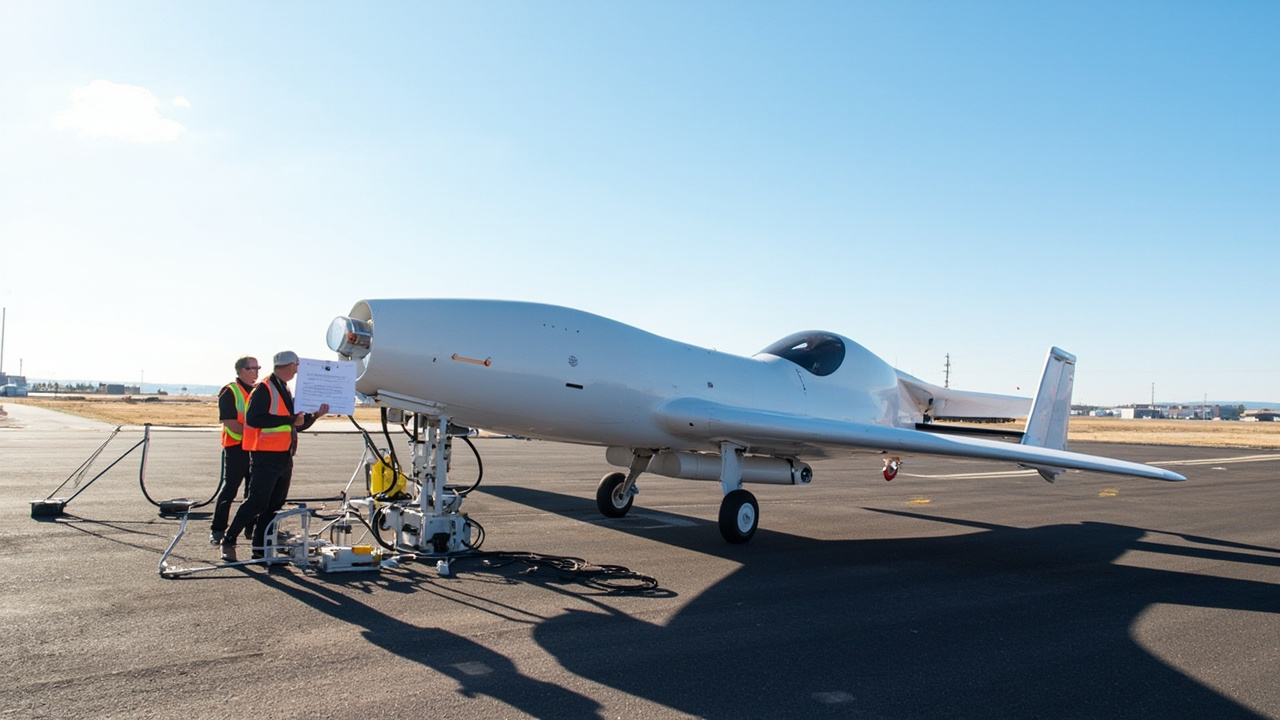
TL;DR: The FAA issued a Special Airworthiness Certificate for Bye Aerospace's first eFlyer 2 prototype, authorizing the two-seat electric trainer to begin flight testing from Centennial Airport.
Bye Aerospace received a Special Airworthiness Certificate from the Federal Aviation Administration for its eFlyer 2 full-scale prototype, clearing the all-electric training aircraft to start flight testing, according to Aviation Week. The FAA awarded the first aircraft, Serial No. 001, its experimental ticket after a detailed inspection of the completed two-seat airplane at the company's facility at Centennial Airport near Denver, according to Aviation Week. The company announced the milestone on September 9, 2026, and Aerospace Testing International reported the clearance on September 10, 2026.
The certificate confirms the airplane is airworthy and authorized to fly, but it is not type certification for commercial sale or service, according to Aerospace Testing International. Bye said it will now conduct a phased flight-test program intended to progressively expand the operating envelope, according to Aerospace Testing International. Chief Executive Officer Rod Zastrow said first flight is close after completion of functional testing, according to Aviation Week.
What the FAA certificate authorizes
Experimental ticket for research flights
The FAA issued the certificate in the experimental category after reviewing the eFlyer 2's airframe, electric propulsion system, instruments and other functional systems to confirm safety for operation, according to Aerospace Testing International. Special airworthiness certificates in this category enable flight testing before an aircraft qualifies for a standard airworthiness certificate.
The inspection took place at Centennial Airport near Denver, Colorado, where Bye is completing flight preparations, according to Aerospace Testing International. Aviation Week reported that the inspection followed completion of the nonconforming prototype's structural build in July.
The prototype is described as full-scale and nonconforming, meaning its outer shape is close to production intent while some systems may change after flight evaluation, according to Aviation Week. Zastrow said the outer mold line is close to conforming with the type design of the production aircraft, according to Aviation Week.
Why first flight matters for the program
Development of the eFlyer 2 has been paced by funding, and first flight is typically a defining moment for a company seeking to become an aircraft manufacturer, according to Aviation Week. Zastrow said flying the prototype could spur financial interest, according to Aviation Week.
Bye has worked with the FAA since 2016 to advance the framework for certification of electric aircraft, according to Aerospace Testing International. Zastrow said, “We’ve worked hand in hand with the FAA since 2016 to help advance the certification framework for electric aircraft.”
He also said the team built and tested the aircraft in a year and described the certificate as an important validation of that work, according to Aerospace Testing International.
How the prototype was built and tested
July structural completion
Bye completed the aircraft's structural build in July after months of structural testing and propulsion validation, according to Aerospace Testing International. The earlier structural work covered the composite wing, fuselage and flight controls over several months, according to Aviation Week.
Engineers then conducted systems integration, additional electrical validation and operational ground testing, according to Aerospace Testing International. The company said ground work included final aircraft systems integration and operational ground testing before the flight-test program, according to reporting carried by the Alliance for Aviation Across America.
Materials and construction involved Toray Composite Materials America, Flying S and Composite Approach, with Toray supplying materials, Flying S manufacturing the empennage and Composite Approach building the remainder of the airframe, according to the Alliance for Aviation Across America account.
The Beast ground-test rig
Validation of the complete propulsion system used a truck-mounted testbed called the “Beast,” according to Aviation Week. The system tested included the Safran ENGINeUS 100 electric engine and MagniX Samson battery system, according to Aviation Week.
On the rig, the team ran the full electric powertrain and validated aircraft systems on the ground before final integration into the airframe, according to Aerospace Testing International. Zastrow said, “The functional testing has been completed.”
The truck-mounted rig was used for propulsion testing at Pikes Peak International Raceway south of Colorado Springs, according to Aviation Week. The rig could articulate to simulate low-speed, multiple-angle-of-attack conditions and evaluate cooling from the annular air intake, according to Aviation Week.
Zastrow said all test data came back favorably and no redesign had been required, according to Aviation Week. He said the company was conducting confirmatory checks with partners to address risks in the independent systems and the combined electric propulsion system, according to Aviation Week.
Propulsion, avionics and charging setup
Motor, batteries and propeller
The two-seat eFlyer 2 uses a Safran ENGINeUS electric motor rated at 150 hp, or 110 kW, and is designed to fly for about three hours, according to Aerospace Testing International. Bye selected magniX battery cells for the aircraft, according to Aerospace Testing International.
Aviation Week identified the powerplant as the Safran ENGINeUS 100 and the energy storage as the MagniX Samson battery system. The Alliance for Aviation Across America account identified the motor as Safran Electrical & Power's EngineUs 100B1 coupled with a Sensenich propeller and MagniX USA battery modules.
Zastrow said the Safran motor and Garmin avionics are already certified, while the remainder of the electrical system is likely to evolve as a result of flight testing, according to Aviation Week. He said the company expects to learn from the flight-test program and then build a maximum conforming prototype, according to Aviation Week.
Airport charging support
Flight testing will be supported by a charging station at Centennial supplied by Australian company Electro.Aero, according to Aviation Week. Zastrow said Bye is also modifying the Beast propulsion testbed into a mobile charging vehicle to support cross-country test flights, according to Aviation Week.
That mobile-charging plan connects ground infrastructure to longer test missions beyond the home field. The phased program will explore the full flight envelope and gather data on the electric propulsion system's functionality and reliability, according to Aviation Week.
Certification path: Part 22 first, Part 23 later
From Part 23 work to light-sport rule
Bye has worked with the FAA since 2016 to advance certification of the eFlyer 2 under Part 23 airworthiness regulations for light aircraft, but now plans to begin with approval under the new Part 22 rule for light-sport category aircraft, according to Aviation Week. The FAA had earlier ruled the aircraft eligible for certification under Part 23, its first such approval for an all-electric type under Amendment 64, according to Aerospace Testing International.
The FAA's revised light-sport rules, known as MOSAIC, now allow electric propulsion, according to Aviation Week. Part 22 allows manufacturers to self-certify aircraft using industry consensus standards to demonstrate compliance, according to Aviation Week.
Zastrow said the company believes the aircraft can meet the Part 22 criteria for speed and weight, subject to confirmation by flight test, according to Aviation Week. He said the intent is to meet the consensus standards swiftly, then apply lessons from Part 22 toward Part 23 certification over the longer term, according to Aviation Week.
Use for flight training
Part 22 allows light-sport aircraft to be used for flight training, according to Aviation Week. Zastrow said a customer survey indicates willingness to accept a Part 22 aircraft to meet training demand and benefit from lower costs, according to Aviation Week.
That training use is central to Bye's business case. The eFlyer 2 is designed to cruise at about 84 mph, or 135 km/h, and to cost roughly one-fifth as much to operate as conventional piston-engine training aircraft, according to Aerospace Testing International.
Orders and next test steps
More than 1,000 aircraft in order book
Bye holds letters of intent for more than 1,000 eFlyer 2s and planned four-seat eFlyer 4s, according to Aviation Week. Aerospace Testing International reported the same combined total as an order book exceeding 1,000 aircraft for the two-seat eFlyer 2 and four-seat eFlyer 4.
Customers named include Spartan College of Aeronautics & Technology, Skyborne Academy, Flex Air Flight School and KLM Academy in the Netherlands, according to Aerospace Testing International. Aviation Week described the buyers as including major flight training schools.
The eFlyer line is aimed primarily at flight schools and general aviation operators seeking lower training costs and emissions compared with conventional piston-engine aircraft, according to Vertus reporting summarized in search results. The operating-cost target and electric propulsion are positioned as the appeal for schools that have placed orders, according to Aerospace Testing International.
Phased envelope expansion
With ground testing complete, Bye will run a phased program that progressively widens the operating envelope, according to Aerospace Testing International. Aviation Week reported that the program will explore the full flight envelope and collect functionality and reliability data on the propulsion system.
The company said it is focused on final inspections and operational readiness before flight trials, according to Vertus reporting summarized in search results. Bye has not announced a specific date for first flight, according to the same Vertus summary.
For the near term, the authorized prototype provides the test article for propulsion, systems and handling evaluation. Lessons from those flights are expected to feed a later, more conforming prototype before production certification decisions, according to Aviation Week.
Sources referenced
- Bye's eFlyer 2 Electric Trainer Gets FAA Approval To Begin Flight Testing (https://aviationweek.com/aerospace/advanced-air-mobility/byes-eflyer-2-electric-trainer-gets-faa-approval-begin-flight)
- Bye Aerospace eFlyer 2 cleared to begin flight testing (https://www.aerospacetestinginternational.com/uncategorized/bye-aerospace-eflyer-2-cleared-to-begin-flight-testing.html)