TL;DR: NASA advanced PRIMA, a $1.2 billion far-infrared observatory, into preliminary design for a targeted 2033 launch as the first Probe Explorer mission.
NASA moved to build a new billion-dollar space telescope on a timetable that would be unusually short for an observatory of its size.
The agency announced Wednesday that PRIMA, short for PRobe far-Infrared Mission for Astrophysics, is advancing to the next phase of development, according to NASA's announcement titled NASA Selects Far-Infrared Telescope as First in New Mission Class. The decision makes PRIMA the first mission in a new Probe Explorers class within NASA's longstanding Explorers Program. If confirmed for implementation, its project cost is capped at $1.2 billion, not including launch and other non-project costs, for a targeted launch in 2033 and a planned five-year mission. Ars Technica reported in With PRIMA, NASA will try to build a billion-dollar space telescope in record time that NASA wants to launch PRIMA seven years from now.
A new middleweight mission line
NASA created Probe Explorers to operate between its smaller Explorer missions and its multibillion-dollar flagships, according to NASA.
Ars Technica reported that Explorer-class missions typically carry cost caps in the range of a few hundred million dollars, while the recently launched Nancy Grace Roman Space Telescope carried a price tag of some $4.3 billion. NASA studied potential Probe Explorer concepts for several years after an independent panel of scientists recommended the category, Ars Technica reported.
That recommendation came from the National Academies of Sciences, Engineering, and Medicine's 2020 Decadal Survey, Pathways to Discovery in Astronomy and Astrophysics for the 2020s, according to NASA. NASA said it selected PRIMA after detailed evaluation of concept studies for Probe Explorer missions, based on scientific merit in alignment with the Decadal Survey's recommendations, feasibility of development plans on cost and schedule, and use of technologies that could support future large missions.
NASA officials described PRIMA as part of a continuing cadence of large astrophysics launches. Shawn Domagal-Goldman, director of the Astrophysics Division at NASA Headquarters, said the agency set a cadence of launching premiere-class missions in both halves of the decade with the Webb and Roman space telescopes, and planned to kick off the next decade with PRIMA.
Why PRIMA advanced now
NASA selected PRIMA to move into Phase B, the stage that advances preliminary design and technology development, according to NASA.
The mission remains subject to a confirmation review based on technical, programmatic and cost performance to determine readiness to begin implementation in Phase C, according to NASA. Ars Technica reported that a preliminary design review will come before a confirmation review at NASA Headquarters a few years from now that will mark final approval to proceed into integration of flight hardware.
PRIMA was the sole finalist for the first Probe Explorer mission after NASA disqualified a competing mission, an X-ray observatory known as AXIS, earlier this year, Ars Technica reported. NASA said a concept study for AXIS indicated it would not meet the agency's schedule and budget constraints, according to Ars Technica.
Ars Technica also reported that NASA's science budget is under pressure from the Trump administration, and that it was not clear until recently whether the budget would support starting development of a Probe Explorer. The scientist leading the AXIS concept study blamed disruptions and mismanagement at NASA's Goddard Space Flight Center in Greenbelt, Maryland, the NASA location charged with leading AXIS if it moved forward, according to Ars Technica.
A seven-year schedule
NASA's targeted 2033 launch would give PRIMA about seven years from its 2026 entry into Phase B to liftoff, according to NASA and Ars Technica.
Ars Technica reported that flagship missions can take decades to design, build and test before reaching the launch pad. The Roman Space Telescope was the exception, taking 10 years from NASA's approval to proceed into development until Roman's launch last month on the way to an observation post a million miles from Earth, according to Ars Technica.
PRIMA, with a cost cap of $1.2 billion excluding launch costs, will not be as big and complex as Roman, so a shorter development cycle is expected, Ars Technica reported. Spaceflight Now reported in NASA announces new space telescope ‘PRIMA’ to launch in 2033 that NASA will select a launch provider at a later time.
NASA said the observatory is targeted to launch in 2033 for a planned five-year mission. That five-year operational plan defines the baseline science survey period now carried in NASA's project planning.
What PRIMA will observe
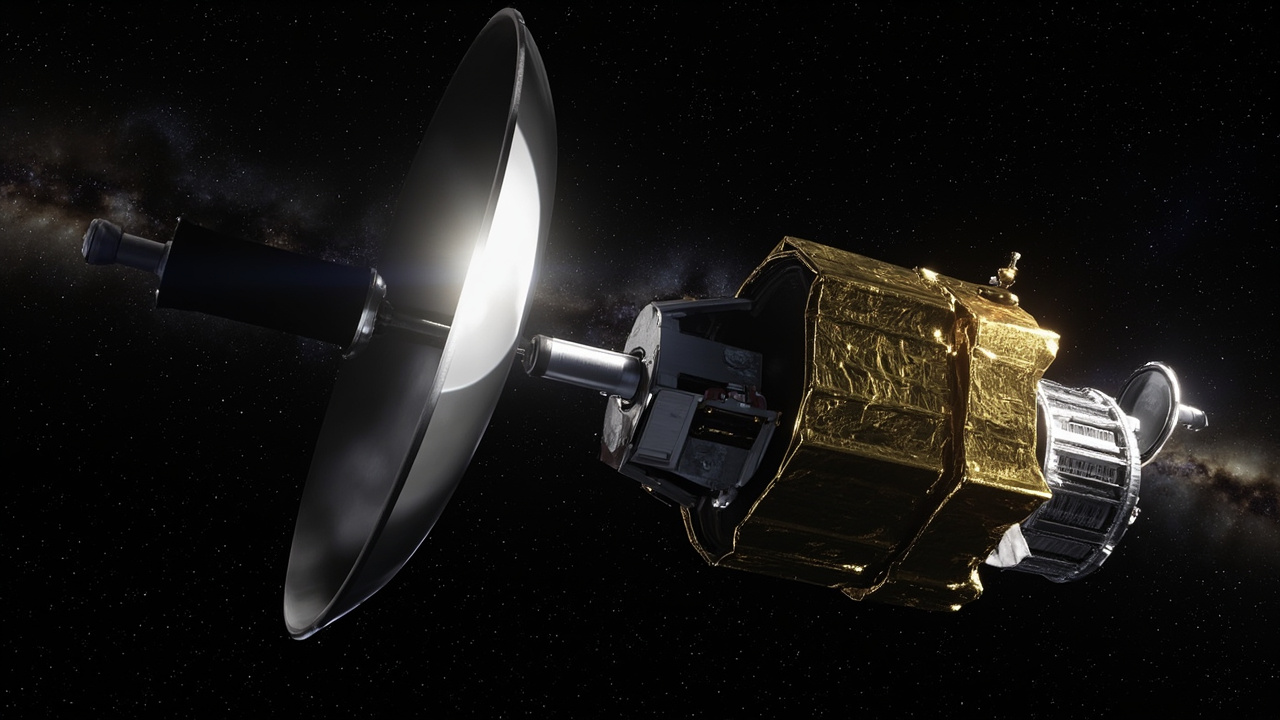
PRIMA carries a 5.9-foot telescope, equivalent to 1.8 meters, and will conduct deep, sensitive surveys in far-infrared light, according to NASA.
The telescope will observe in faint, far-infrared light in wavelengths between 24 and 235 micrometers, Ars Technica reported. Caltech reported in NASA Selects PRIMA Mission; Key Roles for Caltech, JPL, and IPAC that the range extends from 24 micrometers, described as one-third the thickness of a human hair, to 235 micrometers, described as roughly the thickness of two stacked pieces of paper.
NASA said PRIMA will help bridge the gap between existing infrared observatories, such as NASA's James Webb Space Telescope, and radio telescopes. By studying radiant energy that only emerges in the far-infrared, PRIMA will address questions about the origins of planets outside the solar system, how galaxies and their black holes have grown and evolved over cosmic history, and how dust and heavy elements have built up over time, according to NASA.
Ars Technica reported that its far-infrared sensitivity will give PRIMA visibility into the origins of planets and their atmospheres, the coevolution of galaxies and black holes, and changes in dust and metals over cosmic time. Caltech reported that PRIMA will also study the formation of stars and planetary systems, trace the evolution of galaxies across cosmic time, and characterize the composition of exoplanet atmospheres and solar system bodies.
Nicky Fox, associate administrator for NASA's Science Mission Directorate, said: "The PRIMA mission is humanity's next window into the deep universe."
Webb spare parts and extreme cooling
To control cost and schedule, PRIMA will reuse hardware developed for the James Webb Space Telescope.
Ars Technica reported that PRIMA's primary optics must be cooled to 4.5 Kelvin, or minus 451 degrees Fahrenheit, for far-infrared observation. That cooling would usually require a newly built sophisticated cryocooler, but PRIMA will instead use a spare leftover from Webb development, modified to use helium-3 instead of helium-4 as the cooling fluid, according to Ars Technica. The focal planes of PRIMA's kinetic inductance detectors will be chilled lower to 100 milliKelvin, according to Ars Technica.
Caltech reported that PRIMA was designed so its telescope and detectors are cooled to hundreds of degrees below zero, reducing thermal noise that can muddy images. As a result, PRIMA is orders of magnitude more sensitive than previous far-infrared space missions and will produce images with unprecedented sharpness, according to Caltech.
Ars Technica reported that PRIMA's optics are in contention for the coldest ever sent into space. Caltech reported that the mission's detectors stem from three decades of research at Caltech and the Jet Propulsion Laboratory.
Instruments and orbit
Spaceflight Now reported that PRIMA features three primary elements: a cryogenically cooled 1.8-meter telescope, an imaging polarimeter called PRIMAger, and a high-resolution spectrometer called FIRESS.
Caltech reported that PRIMAger will map large areas of the sky and that FIRESS will conduct multimode spectroscopy. Caltech reported that Caltech and JPL scientists pioneered the superconducting microwave kinetic inductance detectors, also called MKIDs or KIDs, that enable PRIMA's ultrasensitive far-infrared cameras and spectrometers.
Those detectors were invented by Jonas Zmuidzinas, a Caltech physics professor, and JPL engineer Rick LeDuc in 1999, according to Caltech. Caltech reported that the two first worked out the use of superconducting materials to detect far-infrared light at a Peet's coffee shop near Caltech, later worked out other design details, and in 2007 installed and tested the detectors at the now-decommissioned Caltech Submillimeter Observatory near the summit of Maunakea in Hawaii. In the past five years, researchers including members of JPL's Microdevices Laboratory engineered KID arrays for the sensitivity required for PRIMA and to withstand space conditions, leading to prototype arrays that demonstrate readiness for flight, according to Caltech.
PRIMA, with a 1.8-meter primary mirror, will operate in an orbit around the Sun-Earth L2 Lagrange point a million miles from Earth, Ars Technica reported. The complete observatory is expected to weigh less than 3.4 metric tons, or 7,500 pounds, at launch, according to Ars Technica.
Who builds and operates PRIMA
NASA's Jet Propulsion Laboratory in Southern California will manage the PRIMA mission, according to NASA.
Other NASA partners include Goddard Space Flight Center in Greenbelt, Maryland, and Marshall Space Flight Center in Huntsville, Alabama, according to NASA. International contributors listed by NASA are CNES in France, ASI in Italy, DLR in Germany, the Canadian Space Agency, KASI and KASA in South Korea, JAXA in Japan, and the UK Space Agency. NASA updated its release on Sept. 24, 2026, to reflect current international partners, according to NASA.
The Jet Propulsion Laboratory, which Caltech manages for NASA, will develop and operate the observatory, according to Caltech. Caltech's Infrared Processing and Analysis Center, known as IPAC, will serve as the mission science center where raw data are received, processed and archived for use by astronomers, according to Caltech and Spaceflight Now. IPAC will also be responsible for scheduling astronomers' time and use of the telescope, according to Caltech.
Caltech President Ray Jayawardhana said PRIMA represents a giant leap for far-infrared astronomy, according to Caltech.
Place in NASA's fleet
NASA places PRIMA alongside Webb and Roman as complementary survey tools rather than a replacement, according to NASA.
NASA said a single mission alone cannot probe all the universe's mysteries, and extending survey capabilities into far-infrared wavelengths with PRIMA enables a comprehensive look at the cosmos. Ars Technica reported that PRIMA will peer deeper into infrared bands than past or current NASA infrared observatories such as Spitzer and Webb, and will build on discoveries by Europe's Herschel space telescope into cosmic filaments and water in star and planet formation.
The Explorers Program is NASA's oldest continuous program for frequent, low-cost access to space using principal investigator-led investigations for astrophysics and heliophysics, according to NASA. Since Explorer 1 launched in 1958 and discovered Earth's radiation belts, the program has launched more than 100 missions, including Uhuru and the Cosmic Background Explorer, which led to Nobel prizes for their investigators, according to NASA. The program is managed by NASA Goddard for the Science Mission Directorate, according to NASA.