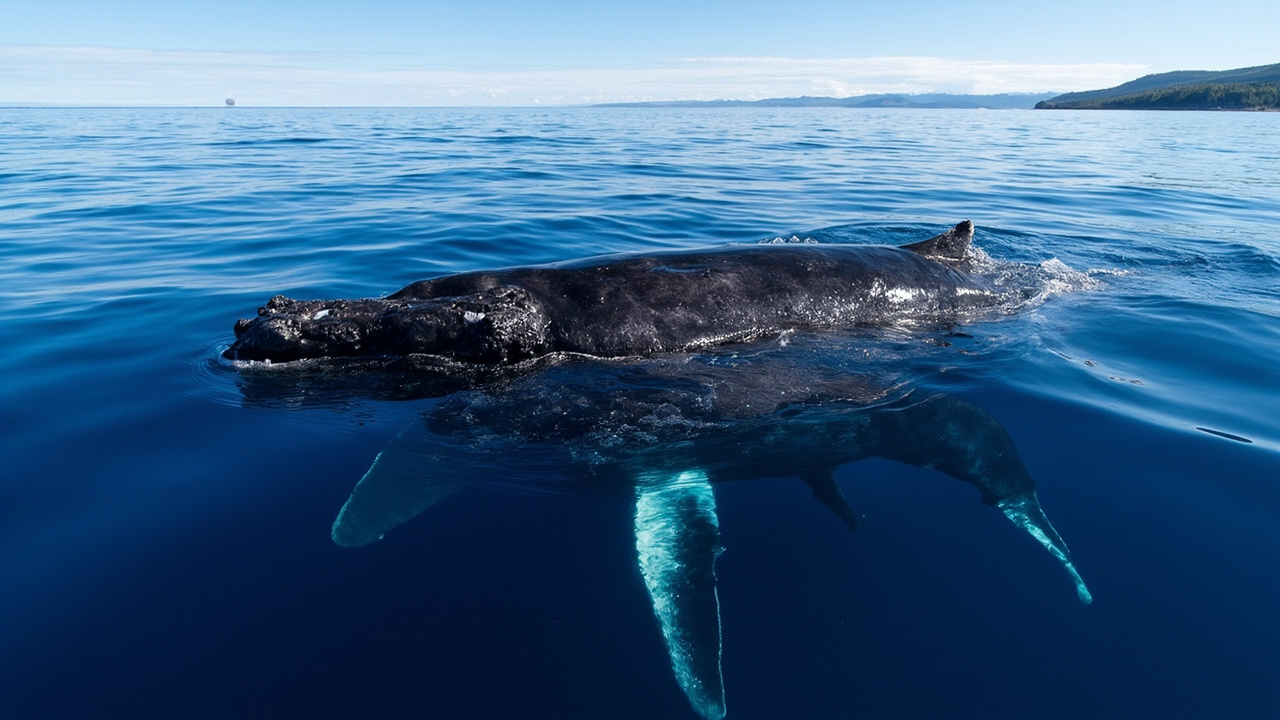
Newly Discovered Baby Right Whale Offers Hope for Species Recovery
A recently discovered North Atlantic right whale calf spotted off Anticosti Island, Quebec, represents a significant bright spot for conservationists focused on this critically endangered species. According to the New England Aquarium, the calf, identified as likely born during the 2025–2026 calving season, adds to the encouraging news as it is the 24th calf identified this season, raising hopes for the whale's recovery.
Discovery Details
On September 25, 2026, researchers from the Mingan Island Cetacean Study captured images of the calf and its mother, known as Silt (Catalog #1817), who is at least 38 years old. This pair went unnoticed during the official calving season, which runs from mid-November to mid-April, before being documented recently through photographic analysis. The findings were publicized as part of the aquarium’s efforts to preserve the North Atlantic right whale population, which is estimated at about 380 individuals.
Amy Warren, a scientist at the aquarium’s Anderson Cabot Center for Ocean Life, expressed delight over this late-season discovery. “Silt was briefly seen in the southeastern U.S. calving grounds in February 2026, so it’s possible she had the calf there but snuck away before they were documented together,” said Warren.
Significance of the Discovery
The identification of this calf is crucial, especially as North Atlantic right whales have seen some alarming trends in recent years. Over the years, female whales have had difficulty reproducing, leading to decreased birth rates. With 24 confirmed calves now in the current season, the number reflects a significant increase compared to past years and showcases the potential for more optimistic conservation outcomes.
This year marks the fourth-highest count of mother-calf pairs recorded since systematic tracking began. In the light of such rare births, researchers are hopeful that a continued focus on conservation efforts might assist in protecting these gentle giants of the ocean from threats such as fishing gear entanglements and vessel strikes, which have led to their population decline.
Mother Whale’s History
Silt, the mother whale, has given birth to six known calves throughout her lifetime, with her first calf named Division succumbing to severe entanglement in 2022. Another calf was reportedly struck by a vessel in 2005. Despite these losses and several entanglements that left her with significant injuries, Silt remains a resilient figure within her species. Additionally, she has three living grandchildren and her first great-grandchild was born this year.
The news of yet another calf is a notably uplifting development for researchers and conservationists. “Each new calf brings not just optimism but also an urgent call to bolster our efforts in protecting this endangered species,” said a spokesperson with the New England Aquarium.
Challenges Ahead
Despite the positive news surrounding new births, the North Atlantic right whale faces numerous challenges that threaten its survival. Vessel strikes and entanglements in fishing gear remain critical threats, making any further increase in the population essential. The announcement of this calf is particularly timely as conservationists ramp up efforts to monitor and safeguard the right whale habitat.
Silt's story, along with those of other right whales, showcases the continuing challenges these creatures face in modern oceans. The collaborative efforts among researchers and organizations across the eastern Atlantic are bolstering the dedication to ensure the survival of this majestic creature.
As the birth tally stands at 24, scientists cannot predict what the future holds for the species, but every calf brings new hope. The long-term survival of the North Atlantic right whale hinges not only on breeding success but also on addressing the existential threats that have loomed over them for decades.
Conclusion
The recent sighting of a new right whale calf near Quebec highlights the essential work of marine conservationists dedicated to tracking and preserving the North Atlantic right whale population. It is a reminder of the ongoing need to remain vigilant and proactive in protecting these endangered animals, ensuring that more joyous discoveries await in the years ahead. Protecting critical habitats and reducing human-related threats will be vital components in the journey towards a more stable and thriving future for this rare marine species.
Key Takeaways
- A new calf sighted off Anticosti Island raises the total for the 2025-2026 season to 24.
- The mother, Silt, is known for surviving multiple fishing entanglements and has a lineage with both losses and successes.
- The North Atlantic right whale population is critically endangered, with approximately 380 individuals remaining globally.
- Each calf born is crucial for the recovery of the species, which faces significant threats from human activities.
FAQs
What is the current population of North Atlantic right whales?
As of now, the estimated population of North Atlantic right whales is about 380 individuals, which reflects ongoing conservation efforts and monitoring.
Why is each new calf important?
Each calf adds to the shrinking population and represents hope for recovery, especially as the species has faced challenges in reproduction and survival due to environmental pressures.
What are the main threats to the North Atlantic right whale?
The primary threats include fishing gear entanglements and vessel strikes, which have significantly contributed to their decline.
Where was the new calf discovered?
The calf was first photographed off the coast of Anticosti Island in Quebec, Canada.
How do researchers track whale populations?
Researchers use photo-identification databases like the North Atlantic Right Whale Catalog to monitor individual whales, track births, injuries, and overall population dynamics.
Sources referenced
- Scientists discovered an unknown baby right whale off Canada. They say it's a cause for joy (https://apnews.com/article/baby-right-whale-endangered-oceans-canada-maine-5dbd9e4f2a9691c6ea8934a0a265bbb3)
- In surprise sighting, previously unknown North Atlantic right whale calf is spotted in Canadian waters - New England Aquarium (https://www.neaq.org/about-us/press-room/press-releases/in-surprise-sighting-previously-unknown-north-atlantic-right-whale-calf-is-spotted-in-canadian-waters/)