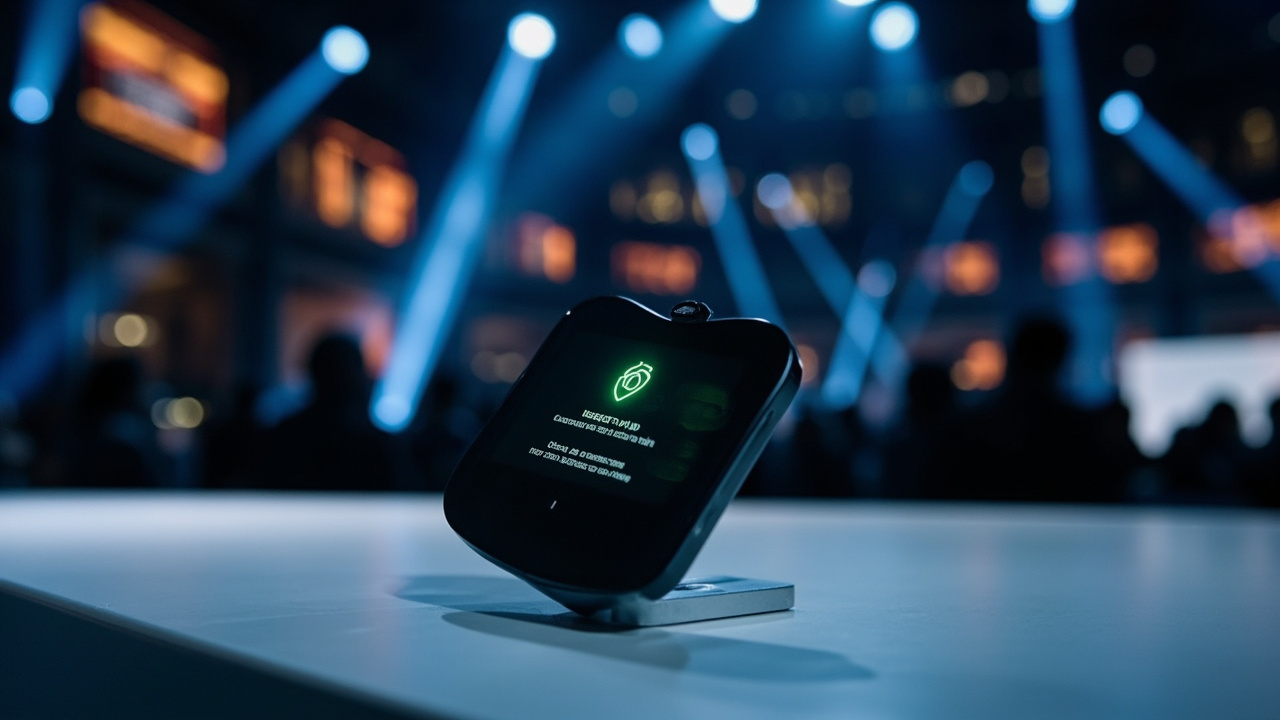
TL;DR: Ledger announced Atom on Oct. 15, 2026, a data-only Android device that works alongside a smartphone and switches to a separate Secure Mode for reviewing and signing crypto transactions.
Ledger has introduced a new kind of hardware wallet that looks like a smartphone. The company announced Atom at its Op3n event in Paris on Thursday, describing a device that runs everyday Android apps in one environment and handles transaction review and signing in a separate protected environment, according to The Block.
The announcement positions Atom as a companion to a user's existing phone rather than a replacement. Ledger says the Atom is "not designed to replace your phone," according to The Verge. The device resembles a regular Android smartphone in size and appearance, but its eSIM capabilities have been limited to data-only operation, with no support for texting or calls, according to The Verge.
What Ledger announced in Paris
Ledger unveiled Atom in Paris as an Android device for apps with a separate Secure Mode for reviewing and signing transactions, according to The Block. The unveiling took place at the company's Op3n event in Paris on Thursday, according to The Block.
While Ledger's previous hardware wallet signers have been compact devices, running custom software and often with E Ink displays, the Atom is presented as a larger Android-based device, according to The Verge. The company announced the Android-based Atom as a device that resembles a phone but is instead designed to be used alongside one, according to The Verge.
The Atom runs on both Android OS and Ledger OS, which sits on its own secure element chip, allowing the user to move into a secure environment for tasks like crypto transactions, according to The Verge. The device runs Android Open Source Project software alongside Ledger OS running on an EAL6+ secure element, according to The Block.
The device switches automatically between Standard and Secure Mode, with an FPGA chip keeping Atom's Android environment separate from Secure Mode, where transactions are reviewed and signed, according to The Block. A Ledger spokesperson told The Block that people could use Atom for regular everyday apps if they like, although it was primarily designed with more sensitive activities in mind.
Price, reservation and planned delivery date
Atom's limited Founder's Edition costs $849, with a $100 fully refundable deposit required to reserve one, according to The Block. Regular orders will cost $899 after launch, the firm said, according to The Block.
That pricing is substantially more expensive than its current hardware wallet product suite, which ranges from $69 to $399, according to The Block. Ledger expects deliveries to begin in summer 2027, pending certification, according to The Block.
The Ledger Atom is scheduled for release in mid-2027, according to CoinDesk. The mid-2027 schedule places first deliveries in the summer 2027 window described by the company, pending certification, according to The Block.
The product will be manufactured at Ledger at its location in Vietnam, as is customary with its more complex devices, according to CoinDesk.
How Standard Mode and Secure Mode are separated
The separation between everyday computing and transaction approval is central to Atom's design. The FPGA chip keeps Atom's Android environment separate from Secure Mode, where transactions are reviewed and signed, according to The Block.
The spokesperson said that the secure mode functions like other Ledger signers and includes clear signing and transaction checks, and everyday apps cannot interfere with it, according to The Block. While a malicious Android app could theoretically send a malicious transaction request, it could not change what the user sees when the request reaches Secure Mode, and the transaction's actual details would still be displayed for approval, according to the spokesperson account reported by The Block.
Users can switch between ordinary smartphone functionality and a protected mode for managing digital assets, according to CoinDesk. The device switches automatically between Standard and Secure Mode, according to The Block.
The spokesperson's description emphasizes that Secure Mode still shows the transaction's actual details for approval even if the request originates from the Android side, according to The Block. That display step is where the user reviews the request before signing, according to The Block.
Cameras, microphones and physical privacy switch
Atom also has a physical switch that cuts power to its cameras and microphone, with both automatically disabled whenever the device enters Secure Mode, according to The Block.
The physical switch provides a hardware-level cut of power to those sensors, rather than a software mute, according to The Block. The automatic disabling applies on entry to Secure Mode, according to The Block.
The design means camera and microphone availability changes with the operating mode. Both are automatically disabled whenever the device enters Secure Mode, according to The Block.
Encrypted messaging and post-quantum plans
Two Atom users can also send encrypted messages to one another using regular Android messaging apps, with the messages decrypted within Ledger OS on the recipient's device, according to The Verge.
Ledger said it will support encrypted messaging using GPG/OpenPGP, allowing messages to be encrypted before they reach a messaging app and decrypted on another Atom device in Secure Mode, according to The Block. Additionally, the company said Atom's encryption system will incorporate post-quantum cryptography compatible with standards developed by the U.S. National Institute of Standards and Technology, according to The Block.
The messaging approach keeps decryption inside the protected environment. Messages are decrypted within Ledger OS on the recipient's device, according to The Verge, and decrypted on another Atom device in Secure Mode, according to The Block.
Everyday apps, Solana Mobile and AI agents
The Atom runs Android, meaning users will be able to install everyday applications like WhatsApp, Instagram and TikTok, according to CoinDesk. Ledger's Atom will run apps like WhatsApp and Instagram and let users switch between smartphone functions and a protected mode for managing digital assets, according to CoinDesk.
The spokesperson said people could use Atom for regular everyday apps if they like, although it was primarily designed with more sensitive activities in mind, according to The Block.
Solana Mobile's Seeker app is also coming to Atom, according to The Block. Announcing Ledger as its first hardware expansion partner in a separate statement shared with The Block on Thursday, Solana Mobile said the app would combine its wallet and dApp Store into one app on Atom, with signing handled by the new device's Secure Mode, according to The Block. Solana Mobile said it has sold over 200,000 devices, according to The Block.
Ledger has designed the device with AI agents in mind, including a partnership with OpenClaw, designed so that agents can handle financial tasks without getting full access to digital wallets, with physical approval required to complete transactions, according to The Verge. The device also incorporates integration with the AI assistant OpenClaw, according to CoinDesk. Ledger said Atom's new protections would block the type of screen-reader implant found in the CryptoBilis incident, while planned integrations include OpenClaw and Solana Mobile's Seeker app, according to The Block.
Tamper protections and supply-chain context
The Atom announcement comes amid fallout from a supply-chain security breach involving Malaysian distributor CryptoBilis, in which attackers reportedly tampered with devices before they reached customers, according to CoinDesk.
Ledger has been forced to cease sales of some of its hardware across southeast Asia following hardware tampering in its supply chain, which has reportedly seen over $86 million worth of crypto stolen from across some users' accounts, according to The Verge. Onchain researchers estimated losses of up to $93.2 million, according to CoinDesk.
Ledger unveiled Atom with new tamper protections amid an ongoing investigation into unauthorized modifications to its existing hardware wallet devices sold through third-party resellers, according to The Block. The device will include tamper-resistant enclosures, sensors and packaging intended to prevent supply-chain attacks like the recent CryptoBilis breach, even when switched off, according to CoinDesk.
Ledger said Atom's new protections would block the type of screen-reader implant found in the CryptoBilis incident, according to The Block.
Website-only sales plan
Ledger initially plans to sell Atom only through its website to limit third-party distribution risks, but it will not offer trade-ins for customers affected by the breach, according to CoinDesk.
The website-only approach is described as a way to limit third-party distribution risks after unauthorized modifications to existing hardware wallet devices sold through third-party resellers, according to CoinDesk and The Block. The investigation concerns unauthorized modifications to existing hardware wallet devices sold through third-party resellers, according to The Block.
The reservation structure starts with the Founder's Edition deposit. A $100 fully refundable deposit is required to reserve one Founder's Edition unit priced at $849, according to The Block. Regular orders will cost $899 after launch, according to The Block.
Sources referenced
- Ledger’s new hardware wallet is an Android phone without the phone | The Verge (https://www.theverge.com/tech/1011133/ledger-atom-hardware-wallet-crypto-security-android)
- Ledger unveils smartphone-like 'Atom' wallet amid CryptoBilis supply chain fallout (https://www.coindesk.com/tech/2026/10/15/under-pressure-ledger-unveils-plan-to-turn-its-crypto-hardware-wallet-into-a-smartphone)