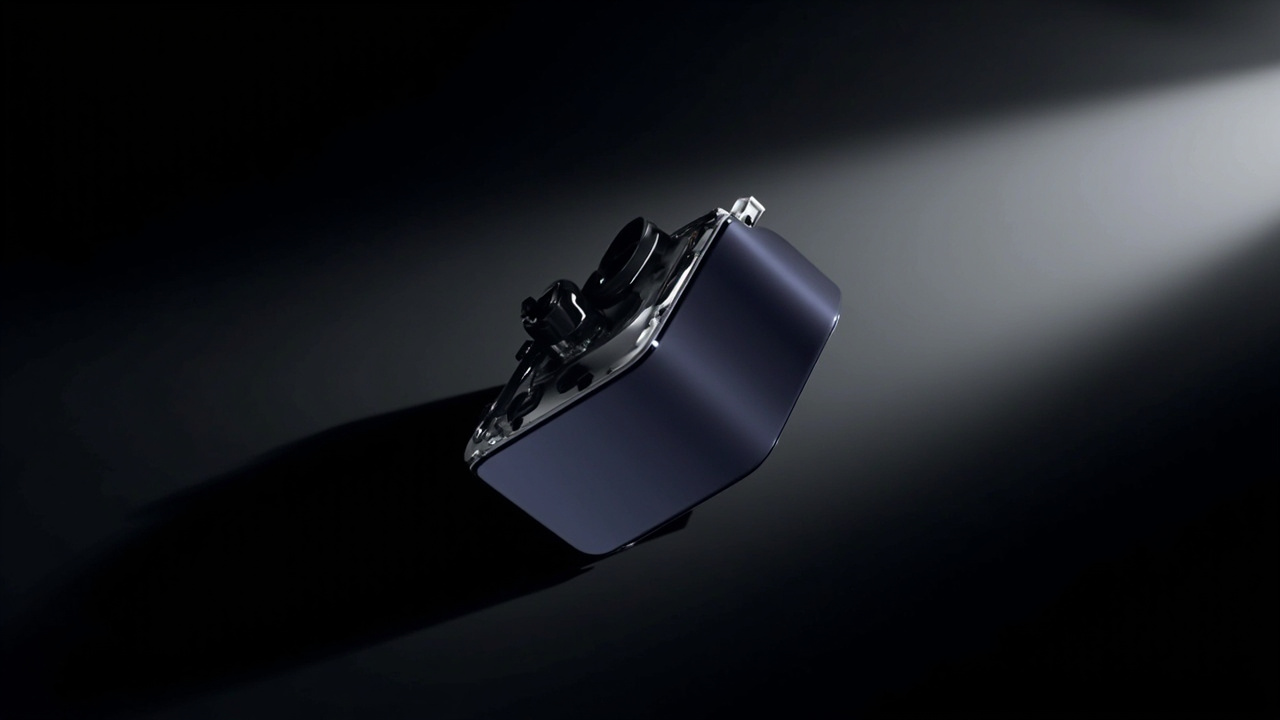
Huawei Mate XT 2 Brings Inward Tri-Fold and Optional Privacy Screen to China
TL;DR: Huawei launched the Mate XT 2 in China on Sept. 7, 2026, switching to an inward-folding tri-fold with a 10.2-inch main display and offering an optional hardware privacy screen on high-end configurations.
Huawei has introduced its third tri-fold smartphone in China, reworking both the hinge architecture and the display technology in ways that closely track recent Samsung hardware, according to The Verge. The new model, marketed as the Mate XT 2 and also styled Mate XT2, moves away from the exposed accordion fold of its predecessors and adds a purchasable privacy-display variant that narrows viewing angles.
The launch took place in China on Sept. 7, 2026, with sales scheduled to begin Sept. 12, according to Engadget. Huawei has not confirmed plans to sell the phone outside China, and U.S. availability is not expected. Starting prices in China are set at 19,999 yuan, or about $2,980 to $3,000, with privacy-screen and collector configurations priced substantially higher.
A third tri-fold, with a new folding direction
The Mate XT 2 is Huawei's third trifold phone, following the first Mate XT and the subsequent XTs model. That original phone, which arrived in China in late 2024 and in international markets several months later, used an accordion-style fold that allowed part of the flexible screen to serve as the outer display when closed, The Verge reported.
That approach eliminated a separate cover panel but kept portions of the bendable display exposed while the device was shut. The follow-up XTs kept the same general arrangement. The XT 2 changes course.
Instead, both outer sections of the flexible panel now fold inward, shielding the large screen when the phone is closed. The design mirrors the approach used on Samsung's Galaxy Z TriFold, The Verge reported, and Huawei's announcement positions durability and screen protection as the rationale for the shift.
According to Engadget, the closed device presents a 6.5-inch outer display for phone-style use. Opened fully, it reveals a 10.2-inch flexible panel with 3K resolution. Coverage from 9to5Google described the same transition as a move from using a section of the main display as an exterior screen to a separate front screen paired with a better-protected tablet-like interior.
How large is the unfolded screen?
The central specification is the 10.2-inch folding OLED. Engadget lists it as a 3K-resolution panel that expands from the 6.5-inch folded state. That pairing — a conventional smartphone-sized cover screen and a roughly tablet-sized interior — puts the device in the same functional category as Samsung's discontinued tri-fold, which offered a 10-inch interior beneath a standard-style smartphone display, according to 9to5Google.
Huawei's display stack also includes adaptive refresh handling. According to GSMDome, the main panel uses adaptive LTPO rates ranging from 1Hz to 120Hz and high-frequency PWM dimming. The cited measurements are 3.5mm thick when fully unfolded and 299 grams in weight, with Huawei describing it as the lightest tri-fold smartphone to date.
Folded thickness is listed at 12.3mm in 9to5Google's specification rundown, alongside stylus support. Battery capacity is listed as 5,600 mAh, with 66W wired charging and 50W wireless charging, according to GSMDome. The phone runs HarmonyOS 7, Huawei's in-house operating system, which is described as adding local artificial-intelligence models, content-generation functions, revised multitasking and an updated Celia assistant.
What does the privacy display do?
The most distinctive option is a hardware-level privacy display, available only on selected configurations. When enabled, the screen activates pixels that project light within a narrower cone, so text and images remain legible to someone looking straight at the panel but appear dark or nearly black to viewers at side angles, The Verge reported.
The concept closely resembles the feature Samsung introduced this year on the Galaxy S26 Ultra, its only phone so far with that technology. Samsung's implementation adjusts pixel output so illumination reaches the primary viewer while limiting what adjacent onlookers can discern, according to 9to5Google. Huawei has now combined that type of viewing-angle control with a tri-panel folding phone, which Engadget described as a first pairing of the two ideas in one handset.
Huawei's pre-launch discussion framed the option as a response to reading sensitive material in crowded places. Earlier reporting from Huawei Central noted demonstrations in which the company rotated a camera through a 60-degree arc to show content disappearing from oblique viewpoints while remaining visible head-on. The production version is presented as an OLED-level change rather than an add-on film.
That distinction matters for foldables. Conventional privacy films narrow the viewing cone but can reduce front brightness, color fidelity and sharpness, and they are difficult to apply reliably to a flexible interior screen that must bend repeatedly. By controlling emission angle at the pixel level, Huawei aims to allow switching between broad sharing and restricted viewing without a permanent overlay.
How much does privacy cost?
Privacy is not standard across the lineup. It is tied to memory, storage and an additional fee.
The Verge reported that the privacy OLED is offered only to buyers who select 16GB of RAM with 1TB of storage and then pay an extra ¥1,000, worth roughly $150, for the screen upgrade. All standard versions include 16GB of RAM, according to Engadget and GSMDome, with storage choices spanning lower capacities up to 1TB and a separate Collector Edition reaching 2TB.
Base pricing starts at 19,999 yuan, equal to about $2,980 to $3,000 depending on conversion. Engadget places the 1TB version with privacy hardware at a minimum of 24,999 yuan, or about $3,725. A Collector Edition with 2TB of storage starts at 29,999 yuan, or roughly $4,470. GSMDome listed euro approximations of about €2,565 for a 16GB/256GB version, about €3,078 for 16GB/1TB, about €3,207 for the 16GB/1TB privacy edition and about €3,848 for the 16GB/2TB Collector Edition.
Exact portfolio labels vary slightly between outlets, with some referring to Mate XT 2 Ultimate Design, but the pricing ladder is consistent: a high entry price, a premium for 1TB capacity, a further increment for privacy hardware, and a top collector tier.
Chip, cameras and durability
Inside, the Mate XT 2 debuts Huawei's Kirin 9050 Pro processor. Engadget reported Huawei's claim of 42 percent faster performance compared with the Mate XT, while GSMDome cited a 46 percent increase over the Kirin 9030 Pro in describing the same chip introduction. The device ships with HarmonyOS rather than Android, continuing Huawei's reliance on its own software platform.
Imaging centers on four cameras. Engadget listed a 50-megapixel main camera, a 40-megapixel ultra-wide camera, a 50-megapixel periscope camera with 3.5x optical zoom, and an 8-megapixel interior selfie camera. GSMDome added detail, describing a 50-megapixel main sensor with a 1/1.28-inch RYYB layout, variable aperture and optical image stabilization, plus a True-to-Color multispectral sensor and 8-megapixel selfie cameras on both interior and exterior displays.
Durability ratings are another change. The Verge cited an IP59 water-resistance rating, while 9to5Google listed IP58/59 dust and water resistance and GSMDome listed IP58 and IP59 ratings. Whichever notation is used, the phone is presented as more resistant to dust and water ingress than earlier exposed-display trifolds.
Dimensions and weight reinforce the portability argument. At 299 grams and 12.3mm folded, it remains heavier and thicker than a conventional flagship bar phone, but Huawei's claimed lightest-tri-fold framing is intended to distinguish it from bulkier multi-hinge rivals.
Samsung parallel and market context
The Samsung comparison is explicit in launch coverage because both headline features originated in Samsung products. The inward-folding tri-fold layout follows Samsung's Galaxy Z TriFold, while the viewing-angle display follows Samsung's Galaxy S26 Ultra privacy screen, according to The Verge and 9to5Google.
Samsung's own tri-fold had a brief commercial life. The Verge reported that the Galaxy Z TriFold was discontinued shortly after its release last year, while 9to5Google noted that Samsung stopped selling the device abruptly earlier this year. Leaks cited by The Verge suggest Samsung continues work on a successor, but no replacement had been released by the time Huawei unveiled the XT 2.
Huawei's timing therefore combines two Samsung concepts that never coexisted in a single Samsung phone: a protected tri-fold interior and a switchable narrow-angle OLED. Engadget framed that combination as Huawei's attempt to retain influence in the foldable segment despite its limited access to Western markets.
U.S. sales are not anticipated. Engadget noted that Huawei is still treated as a national-security risk in the United States, making a formal U.S. offering unlikely. Huawei itself left international release plans unspecified, The Verge reported, leaving China as the confirmed market and Sept. 12 as the confirmed on-sale date for standard versions.