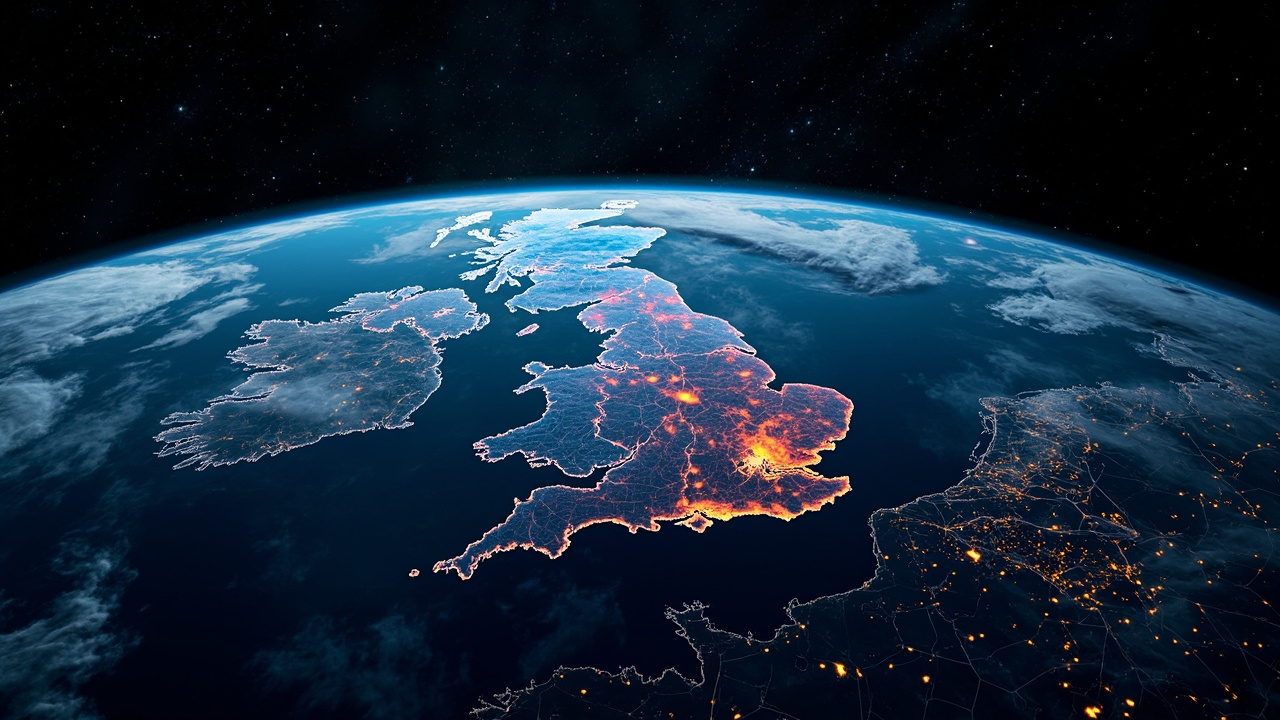
TL;DR: Google launched WeatherNext 3 with hourly satellite-fed forecasts and sharper local detail.
Google introduced WeatherNext 3 on September 3, 2026, describing it as its most advanced and most accurate global weather AI model. According to Google's official blog post titled "WeatherNext 3: Our most advanced global weather AI model," the system learns directly from real-time observations to deliver hourly forecasts with finer local detail for rain, snow, temperature and clean-energy variables. Reporting by The Verge adds that the upgrade is now incorporated into Search, Maps, Gemini and other Google products.
The announcement centers on two practical changes for everyday users: fresher input data and finer output grids. Instead of relying only on historical analysis carrying a delay, the new model ingests live global geostationary satellite mosaics alongside traditional analysis. That lets it issue a new forecast each hour grounded in recent observations, according to the Google blog post. The Verge reported that the approach is intended to improve accuracy for precipitation in particular.
What exactly did Google announce?
Google DeepMind and Google Research introduced WeatherNext 3 as a flagship forecasting model for worldwide use. The Google blog post says independent live evaluations by Brightband rank it as the most advanced and accurate global weather model to date.
The company positioned the launch as a response to limits in earlier AI forecasting. Previous models often lacked sufficient spatial resolution and struggled to incorporate real-time data from satellites, according to the blog post. WeatherNext 3 is presented as a way to provide timely and more localized predictions for events that affect daily decisions, agriculture, supply chains, clean-energy production and national economies.
Distribution is broad from the start. The blog post says the model is integrated across Search, Gemini, Maps, Google Maps Platform and Cloud. The Verge reported incorporation into Search, Maps, Gemini and other Google products, while Android Authority noted that the new forecasts power weather experiences in Search, the Gemini app, Maps and several developer and business services.
Why satellite data changes the forecast cycle
Most AI weather models, including WeatherNext 2, trained on data from numerical weather prediction models, according to the Google blog post. Those numerical models are supercomputer-driven physics simulations that carry a six-hour data lag. The Verge similarly described traditional forecasting as relying on supercomputers that simulate atmospheric physics by solving complex equations, a process that involves a time lag.
That lag can create biases for fast-changing variables such as rain or surface temperature, the Google blog post says. AI models built by Google and others can make faster predictions by recognizing patterns in historical weather data, as reported by The Verge.
WeatherNext 3 adds a live observational stream. By ingesting a mosaic of live, global geostationary satellite data, the model gains a continuously updating view of the atmosphere, according to the Google blog post. Research engineer Samier Merchant told The Verge that a central development is moving beyond data most global AI models train on to leverage fresher and richer observational data sets.
The result is a rapid update cycle. The blog post says the model generates a new forecast every hour, each grounded in the most recent satellite observations available. The Verge reported that WeatherNext 3 produces a forecast each hour based on the most recent satellite observations, allowing faster predictions than earlier AI models.
How much sharper is the new global picture?
Resolution — how finely a forecast divides time and space — is a major theme of the announcement. WeatherNext 3 generates hourly forecasts at multiple spatial resolutions while maintaining physical consistency from broad wind patterns to local topography, according to the Google blog post.
Key surface variables such as temperature and moisture can be visualized at 5-kilometer resolution, other surface variables at 10 kilometers, and atmospheric variables such as wind speed at 25 kilometers, the blog post says. Overall, Google describes the global picture as roughly five times sharper than WeatherNext 2, which produced forecasts on a 25-kilometer grid in 6-hour increments. The Verge reported the same comparison, noting that WeatherNext 2 produced forecasts every six hours on a 25-kilometer grid while the newer model can visualize certain variables at up to 5-kilometer resolution.
Android Authority likewise reported that WeatherNext 2 worked in six-hour increments on a 25-kilometer grid, while WeatherNext 3 can generate hourly forecasts and show some conditions at 5-kilometer resolution. A comparison image of 2-meter temperature forecasts over the United Kingdom illustrates the difference, showing WeatherNext 2 at 25-kilometer resolution beside WeatherNext 3 at native 5-kilometer resolution, according to the Google blog post and reporting by The Verge.
Inside the system, the blog post describes a single, flexible Functional Generative Network mesh transformer that takes live one-hour geostationary satellite mosaics plus traditional historical analysis and outputs dense gridded fields, discrete cyclone tracks and station-level predictions.
Precipitation is the biggest test
Rain and snow are the focus of the accuracy claims. Global models have struggled with precipitation because rain and snow systems are driven by fast-moving cloud processes on tiny scales that are hard to represent with traditional physics simulations, according to the Google blog post.
The company says WeatherNext 3 can deliver precipitation forecasts up to 50 percent more accurate when looking at least a day in advance, as reported by The Verge and Android Authority. The Verge added that Google expects speed and resolution to help particularly with rain and snow from fast-moving weather systems.
Satellite input also helps where ground sensors are sparse. Using satellite data fills gaps in locations with fewer rain gauges on the ground, according to The Verge. Those places are primarily outside the United States and Europe, where Google says the newest model can provide the largest forecast improvements. Android Authority reported that the largest gains are expected in places where forecasting has traditionally been less reliable.
The Google blog post adds technical context for local variation. Temperature and humidity can fluctuate over just a few kilometers, a pattern relevant near coastlines, valleys or mountain ranges. To address it, WeatherNext 3 trains directly on sparse weather station observation data, allowing global forecasts on a 5-kilometer grid that account for regional details such as topography. The blog post says that approach is particularly vital for regions across Latin America, Africa and Asia-Pacific that have historically been underserved by high-resolution forecasting because of supercomputing costs of traditional regional models.
Built for wind and solar planning
WeatherNext 3 introduces variables designed for renewable-energy production, according to the Google blog post. The model forecasts 100-meter wind speeds, roughly at turbine height, for wind-energy output, alongside high-resolution cloud cover and sun radiation levels to help solar farms estimate light received on the ground.
The Verge reported that the model was designed to produce forecasts for renewable-energy generation, including wind speed at 100 meters at about turbine height. Research scientist Ferran Alet told The Verge that making renewables appealing is important as energy needs increase for Google and humanity, in the context of growing data-center demand from generative AI tools.
The blog post says the energy data is intended to help grid operators and renewables developers predict generation from clean-energy assets and match it with consumer demand. Android Authority did not focus on energy variables, but its summary emphasized that finer local detail and hourly updates should help forecasts react more quickly to changing conditions.
Where you will see it and what it does not replace
For consumers, the change appears inside familiar apps rather than as a separate download. The Google blog post says WeatherNext 3 now includes hourly refreshes, higher resolution, precise precipitation forecasting and clean-energy variables across Search, Gemini, Maps, Google Maps Platform and Cloud. The Verge reported that the model is now incorporated into Search, Maps, Gemini and other Google products.
Google has also worked with the U.S. National Hurricane Center and other agencies in Asia to improve forecasting using its AI models, according to The Verge. A separate Google DeepMind explainer published September 1 discussed cyclone forecasting and noted partnerships around hurricane-season prediction, underscoring agency interest in longer warning horizons.
The company does not present AI as a replacement for physics-based methods. WeatherNext 3 is still trained on data from physics-based models, and weather agencies typically consider a range of predictions when issuing warnings, according to The Verge. The Google blog post similarly frames numerical models as useful but delayed, with satellite observations and station data adding freshness and local fidelity rather than discarding earlier methods.
Sources referenced
- Google says its AI weather model is getting better | The Verge (https://www.theverge.com/tech/988921/weather-forecast-ai-model-google-satellite-update)